EU MDR
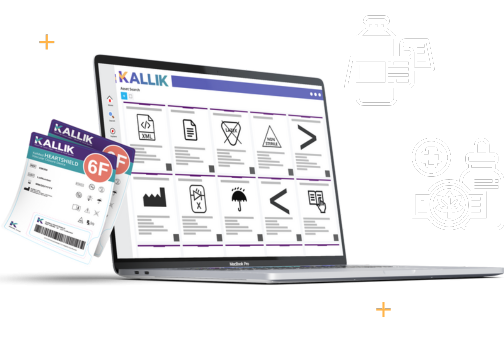
Navigate the complex world of EU MDR regulations with Kallik’s labeling and artwork management solutions. Our intuitive software empowers medical device manufacturers to create compliant labels quickly and accurately, saving time and reducing errors.
With advanced automation, approval, and artwork generation tools, our software ensures total regulatory compliance with EU MDR. Go to market faster and scale your medical device business with peace of mind using Kallik’s leading software.
What is EU MDR?
The EU Medical Device Regulation (MDR), officially known as Regulation (EU) 2017/745, establishes stringent rules and guidelines for the design, manufacturing, and marketing of medical devices sold within the European Union (EU). It aims to ensure a high standard of quality and safety for medical devices, focusing on transparency, traceability, and enhanced post-market surveillance.
This regulation replaces the Medical Devices Directive (MDD) and imposes more rigorous requirements for device labeling, clinical evaluations, and ongoing monitoring of products after they have been placed on the market. The MDR applies to all types of medical devices, from basic instruments to complex life-support systems.


Medical Devices and IVD Manufacturers
The EU Medical Device Regulation (MDR) impacts the medical device industry, including in vitro diagnostics (IVDs). Companies must re-certify products like surgical instruments and diagnostic machines under the new guidelines, conducting clinical evaluations and updating documentation to meet stricter safety standards. IVD manufacturers, regulated by the In Vitro Diagnostic Regulation (IVDR), face similar challenges, requiring rigorous performance testing. Both sectors must comply with new labeling requirements, including Unique Device Identifiers (UDI), enhancing traceability and ensuring patient safety.

Pharmaceuticals
Pharmaceutical companies that produce combination products—such as drug-eluting stents, pre-filled syringes, or insulin pens—must meet the same stringent requirements as medical device manufacturers. The medical device component of these products now falls under the MDR’s purview, which increases the burden of clinical testing and certification.
Combination products require updated labeling to reflect both the drug and device components. The inclusion of UDIs is mandatory, and the product’s labeling must provide detailed information on safety, usage, and regulatory compliance.

Healthcare Providers and Hospitals
While not directly manufacturing devices, healthcare providers may be required to reassess the equipment they use in compliance with EU MDR standards. Hospitals that manufacture custom-made devices, such as dental implants or prosthetics, must also meet MDR requirements. Hospitals may need to ensure the labeling of custom-made devices complies with MDR standards, including appropriate UDI labeling and post-market surveillance requirements.
How Does EU MDR Impact Labeling and Artwork Management?
Detailed Labeling Requirements: The EU MDR mandates specific requirements for medical device labeling. This includes detailed information like the device’s intended purpose, manufacturer details, and instructions for use. Labels must also include unique device identifiers (UDIs) and specific symbols, influencing how label designers and label printers create packaging labels using label creation software.
Regulatory Compliance: Artwork design and label design must adhere to EU regulations, including language requirements (translations) and specific safety and performance information. Compliance with these regulations is crucial for avoiding legal issues, impacting how you use label printing software and artwork approval software.
Updates and Revisions: The MDR requires that labeling and packaging artwork be updated to reflect any regulatory changes or new device information. This involves using artwork management software to keep track of revisions and ensure that all labels templates and label designs are up to date.
Traceability: Proper labeling and artwork management are essential for traceability and post-market surveillance under the EU MDR. This includes keeping accurate records of label designs and ensuring compliance with regulatory standards through label printing software and artwork management software.
How Veraciti Can Help You
How Veraciti Can Help You
Veraciti significantly aids in managing regulations like the EU MDR by providing comprehensive visibility over assets, which ensures compliance and operational efficiency. Its 'where used' functionality allows users to quickly identify and track where each asset is utilized, facilitating swift and accurate updates across all instances.
Additionally, AAG enables users to implement mass changes efficiently, ensuring that all necessary updates are applied uniformly. This capability, combined with the ability to generate new artwork seamlessly, ensures that companies can easily adhere to new regulations, maintaining compliance and reducing the risk of errors or delays in product management and distribution.

Want to know more about how Kallik can help your business with the latest regulations?
Want to know more about how Kallik can help your business with the latest regulations?
Kallik has a wealth of experience working with a wide variety of organizations and manufacturers across highly regulated industries. Our label and artwork management solution, Veraciti™ is continuously adapting to changing regulation requirements. Get in touch today and see how Kallik can benefit your labeling and artwork management process.