
Three Labeling and Packaging Regulations Affecting the EU in 2026
With three major regulatory updates on the horizon, businesses operating in or exporting to the EU must act now to ensure continued compliance. Here is everything you need to know to stay ahead of the curve.
ESPR and Digital Product Passports: A New Era for Labeling Compliance
The Ecodesign for Sustainable Products Regulation (ESPR) represents a major shift in how products are designed, labeled, and brought to market in the EU. While its primary focus is sustainability, its impact extends far beyond materials and manufacturing. ESPR introduces new requirements around product transparency, lifecycle performance, and environmental impact, all of which must be clearly communicated and supported by accurate data.
For labeling and artwork teams, this creates a new layer of complexity. Information that was once managed in isolation must now be connected across systems, suppliers, and product variants. Label content will increasingly need to reflect not just regulatory compliance, but also sustainability metrics and product-level data that can be validated and updated over time.
A key component of ESPR is the introduction of the Digital Product Passport (DPP), which will provide structured, accessible product information through digital means such as QR codes or data carriers. This effectively turns the label into a gateway to deeper product data, reinforcing the need for robust data governance, traceability, and integration between labeling systems and broader enterprise data.
Revised Classification, Labelling, and Packaging (CLP) Regulation
The EU CLP Regulation, which began rolling out in December 2024, marks a milestone in the EU’s commitment to chemical safety and transparency.
How the EU CLP Regulation Affects Product Packaging and Labeling:
From 2025 onwards, the updated CLP Regulation introduces new hazard classifications for endocrine disruptors, PBT/vPvB, and PMT/vPvM substances, requiring updated labels and safety data sheets. Stricter labeling and packaging rules will enhance readability, child safety, and accessibility.
Companies must review product classifications and update poison center notifications ahead of compliance deadlines: January 1, 2026, for substances and May 1, 2028, for mixtures. In order to meet these deadlines, it's crucial that businesses start preparations now to ensure smooth compliance.
The CLP revisions align with the United Nations’ Globally Harmonized System (GHS) and will strengthen the EU’s internal market for chemicals.
You can find more information about the EU CLP regulation in our recent blog here.
Focusing on Sustainability with the New Packaging and Packaging Waste Regulation (PPWR)
Since entering into force on February 11, 2025, the PPWR has fundamentally redefined sustainability for businesses manufacturing or selling products in the EU. We are now in the critical final countdown toward the first major application deadline.
How the New Packaging and Packaging Waste Regulation Affects Product Packaging and Labeling:
By August 12, 2026, businesses must comply with several immediate mandates. Most notably, a strict ban on PFAS (forever chemicals) in food-contact packaging takes effect, with no grace period for existing non-compliant stock. Additionally, all packaging must now be accompanied by an EU Declaration of Conformity to ensure market access.
Standardized harmonized labels—featuring mandatory pictograms for material composition and sorting instructions—are currently being phased in to replace fragmented national systems. While the 70% recyclability mandate and minimum recycled content targets (targeting 30%+ for most plastics) do not become legally binding until January 1, 2030, the design-for-recycling (DfR) phase must begin now to avoid costly portfolio overhauls.
Early alignment with these 2026 milestones is essential to avoid market rejection and penalties. You can find out more about the new PPWR here, and our labeling experts at Kallik will soon be providing further guidance to help ensure a smooth transition as this regulation comes into effect.
How To Ensure Label and Artwork Compliance in 2026
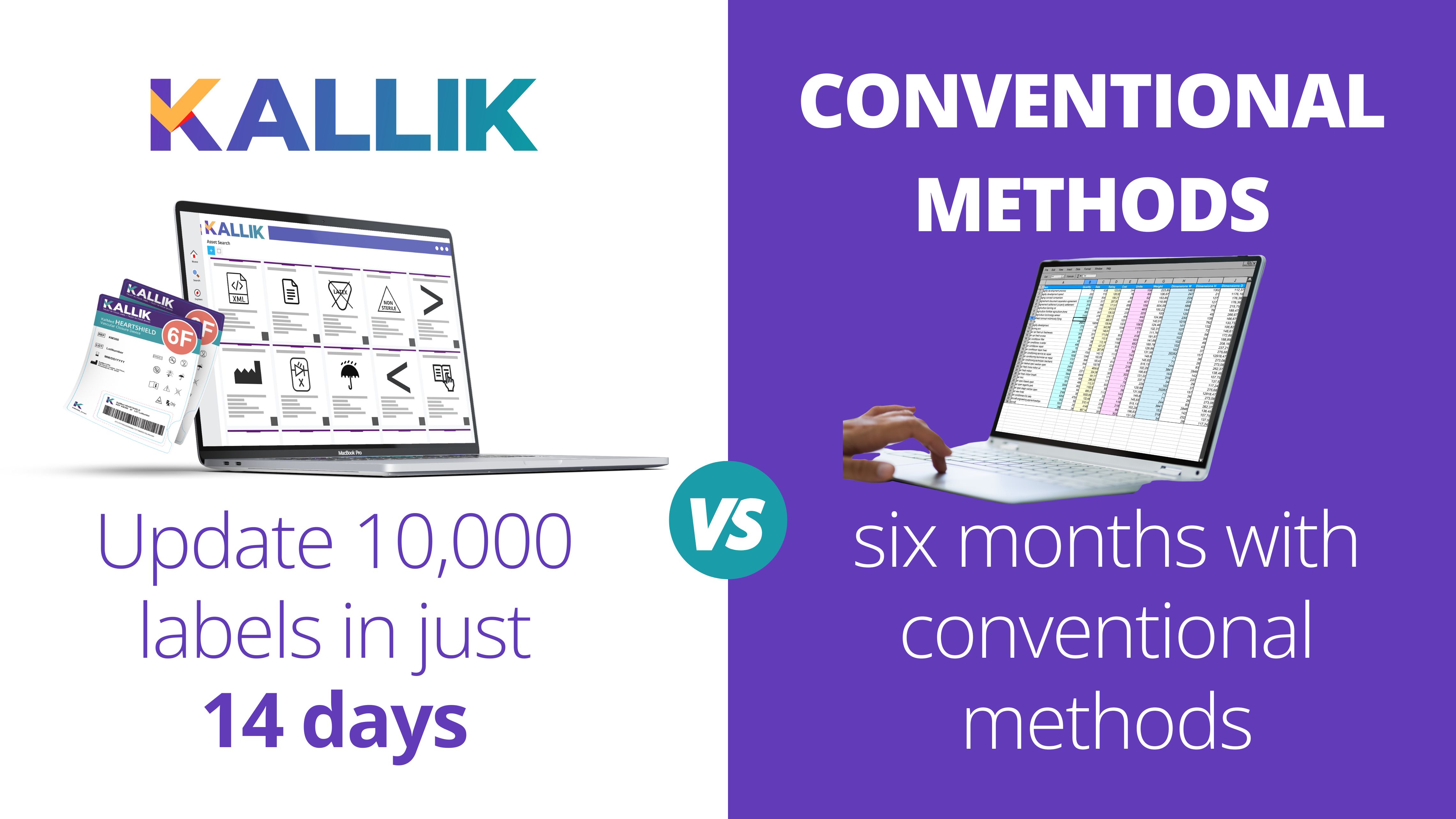
With several new labeling requirements on the horizon, you might be wondering where to start. The threat of non-compliance and the thought of months (or even years!) of hefty fees from third part organizations to guide you through these changes has probably got you wondering where to start. Well, why not speak to Kallik? Our labeling and artwork management experts are ready to help. With the ability to change 10,000 labels in as little as 14 days with the help of our automated tools and innovative technology, our end-to-end system makes it easier than ever to get ahead on new regulations.
With Kallik's Gartner-recommended software you can:
- Take advantage of our AI migration technology
- Access the platform from anywhere in the world via your browser
- Always have the latest version of our software with real-time updates
- Expereince 24/7 365 support from a team of experts
- Complete complicated tasks with one click thanks to innovative, automation features
- Prioritize sustainability and consumer safety with minimal manual input, minimizing errors
Your Partner for Compliance and Beyond
Preparing for these regulatory changes doesn’t have to be daunting. By adopting a platform that automates processes, supports digital labeling, and provides expert guidance, your business can turn compliance into a competitive advantage.
Don’t wait until it's too late to act. Start preparing now to ensure your labels are not only compliant but also a reflection of your commitment to safety, sustainability, and innovation. Want to know more? Speak to our labeling and artwork experts here, or book a demo here.