Cardinal Health’s Journey to a More Connected Global Labeling Model

A label can seem like one of the smallest parts of a product launch until it becomes the thing slowing everything down and keeping you up at night. In regulated healthcare, labeling touches compliance, manufacturing, supply chain, quality, speed to market, and patient safety. For Cardinal Health, that reality helped drive a clear shift: labeling could no longer be treated as a local factory or warehouse process. It needed to become an enterprise asset.

Pete Jenny, Vice President of IT, Global Operations and Supply Chain at Cardinal Health, discussed this shift during Kallik’s publicly available webinar with MedTech Intelligence, which you can watch here. Reflecting on Cardinal Health’s labeling transformation, he explained: “We need to really start treating this as an enterprise asset rather than a warehouse or factory asset.”

Pharmaceutical environment


The Challenge


With operations spanning 30 plants and 50 distribution centers worldwide, Cardinal Health was managing labeling across a complex global footprint. The organization had six disparate labeling systems, many of which were outdated or no longer supported. As product portfolios expanded and regulatory demands increased, these disconnected systems created unnecessary friction.

Manual processes made label changes more time-consuming and limited standardization made it harder to maintain consistency across regions, sites, and product lines. Without a centralized repository, teams had less visibility into labeling assets, changes, and reuse opportunities.

Cardinal Health needed a scalable, enterprise-wide approach that could support global operations while making everyday labeling work faster, more controlled, and easier to manage.


The Kallik Solution


Cardinal Health partnered with Kallik to implement Veraciti™, Kallik’s cloud-based labeling and artwork management platform. The goal was to move away from fragmented local systems and toward a unified global platform that could centralize labeling assets, automate key processes, and support long-term transformation.

Kallik provided Cardinal Health with a centralized repository for labeling content and assets, helping teams access, manage, and move labels more easily across sites. Template automation helped reduce manual input and improve consistency, while the SaaS model offered the flexibility and scalability needed for a global enterprise environment.

The implementation also addressed one of the most challenging parts of labeling transformation: migration. Kallik worked with Cardinal Health to develop an automated approach for converting labels from one system to another, helping reduce migration effort and accelerate the move to a modern platform.

As Pete shared in the webinar: “Kallik really partnered with us and helped us come up with an automated way of converting the labels from one system to another.”

medical devices


The Results


By centralizing labeling and artwork management through Veraciti™, Cardinal Health has been able to create a more connected, consistent, and efficient labeling environment.

Pete described the impact clearly in the webinar: “We’ve been able to increase the amount of reuse that we have in labels. We have improved our overall timeframe to design and develop labels. But I think the biggest thing that we have is the access to the central repository of labels and that we can move labels from one plant to another plant kind of seamlessly.”

That ability to reuse and transfer labels across plants is especially valuable in a global operation. Instead of recreating work or managing updates in multiple disconnected systems, teams can work from a shared foundation. This supports faster label development, more consistent content, and greater control across the labeling lifecycle.

Kallik’s platform also helps Cardinal Health respond more efficiently to regulatory change. With centralized data, automated workflows, and improved visibility, updates can be managed with greater speed and confidence than was possible through legacy systems. Reducing manual input also helps minimize the risk of errors.


Business Benefits


Through working with Kallik, Cardinal Health has strengthened labeling and artwork management across several key areas: improved label reuse, faster design and development timelines, centralized access to labeling assets, greater consistency across regions and facilities, reduced reliance on outdated legacy systems, and improved visibility, traceability, and control.


A Partnership Approach


For Cardinal Health, the decision to work with Kallik was not only about platform functionality. It was also about finding a partner that could support a long-term transformation journey.

“Kallik really came at it from a partner standpoint and really has worked well with partnering with Cardinal,” Pete said in the webinar. “These journeys are over time and you really want an organization that will partner with you and adjust as things go forward. And then finally, the SaaS cloud nature of it is why we picked it.”

That partnership approach has helped Cardinal Health move toward a more standardized, automated, and scalable labeling model – one that treats labeling as a strategic enterprise capability, not just a local operational task.
Medical devices


Want to Know More?


Cardinal Health’s experience shows what is possible when labeling is managed as a connected enterprise process. For global health care and medical device organizations facing complex regulatory requirements, disconnected systems, and growing product portfolios, a centralized cloud-based platform can help improve control, reduce manual effort, and support faster, more confident change.

To learn how Kallik can help your organization modernize labeling and artwork management, speak to one of our experts today on +44(0) 1827 318100 or email enquiries@kallik.com. For further information on our leading, end-to-end, global label and artwork management software, read the brochure below or click here

Medical device in pharmaceutical environment

Mary Kay Simplifies Global Labeling, Ensures Compliance, and Boosts Efficiency

For more than half a century, Mary Kay Inc. has empowered women while revolutionizing the world of business. Today, the Texas-headquartered multinational is a multi-billion-dollar organization with millions of independent sales consultants in nearly 40 countries. With such a vast global footprint, Mary Kay relies on robust, scalable, and compliant packaging and labeling processes to serve diverse markets effectively.

Kallik’s Veraciti solution has enabled Mary Kay to move from legacy, document-driven processes to a content-centric approach, unlocking automation, improving compliance, and delivering efficiencies across global markets.

Challenges

Mary Kay’s growth into nearly 40 global markets exposed limitations in legacy labeling and artwork processes:

  • A document-driven approach concentrated content entry in one place, causing duplication, lack of ownership, and slower responses to regulatory-driven changes.
  • Multilingual requirements created very high complexity: insert content in many languages with many fields and strict ordering.
  • Translation inefficiencies caused repeated requests and inconsistent phrasing across pack types.
  • Finding and updating all artworks affected by a change (for example address changes) was time-consuming.

From the Mary Kay case materials, the business made the need clear: they needed a global system that enabled ownership of content while tracking and tracing changes centrally.

The Kallik Solution

Mary Kay selected Kallik’s Veraciti because it offered a full-circle, content-centric platform that automated artwork generation, centralized content and translations, and provided robust “where used” search and reporting. Key capabilities include:

  • Semi-automated artwork (Cascade plugin) to populate templates and generate multilingual inserts automatically.
  • Phrase Manager to centralize and re-use approved copy and translations.
  • Where Used functionality to locate and update every artwork impacted by a change.
  • Cloud collaboration to enable global teams and external partners to work from a single source of truth. 

Key features delivering value to Mary Kay include:

Semi-Automated Artwork Creation: The Cascade plugin allowed production artists to automatically generate packaging artwork templates in multiple languages, drastically reducing manual effort and risk of error.

Phrase Manager for Consistency: Veraciti’s Phrase Manager centralized translations, eliminating duplication, ensuring consistency across products, and cutting translation costs for subsidiaries.

Where Used Functionality: Enabled rapid identification and updates of all artworks impacted by regulatory or business changes — for example, when Mary Kay updated facility addresses globally.

Cloud-Based Collaboration: Provided a single, centralized platform accessible to global teams and external partners, increasing transparency and accountability.

“Kallik’s unique selling point was the ability to automate artwork. It was the only company that could deliver this functionality.” Emma Polman, Manager, Creative Business Packaging, Mary Kay Inc.

The Results

With Kallik’s Veraciti in place, Mary Kay has transformed its packaging and labeling operations:

  • Faster Artwork Creation: Significant reduction in time to create and edit artworks, freeing resources to focus on additional marketing projects.
  • Streamlined Translations: Efficient management of translations across 17+ languages, ensuring accuracy and eliminating repeated requests.
  • Regulatory Agility: Quick and accurate updates across global packaging whenever regulations or business data changed.
  • Improved Data Flow: Automatic data transfer between systems (e.g. Agile and PIM), ensuring a single source of truth and reducing errors.
  • Scalable for Growth: Simplified entry into new markets, including South America, with the ability to easily incorporate country-specific labeling requirements.

“Veraciti has vastly simplified our entry into new markets such as South America, as in countries such as Columbia we needed to have country specific data on labeling and packaging." - Colleen Maxwell, Digital Media & IT Professional, Mary Kay Inc.

Business Benefits at a Glance

  • Optimization of global labeling and artwork processes
  • Reduced time and resources needed for translations
  • Faster regulatory response times, lowering compliance risk
  • Automated artwork generation, improving efficiency and accuracy
  • Extended best practices into promotional materials and beyond

A Trusted Partnership

Mary Kay also values Kallik’s collaborative, forward-thinking approach: “The Kallik staff have been great partners on this journey. They listen, they evolve the system, and we’re excited about where this partnership will take us next.” With Veraciti, Mary Kay has not only modernized its global labeling processes but also future-proofed its operations to support growth, compliance, and consistency across every market.

Want to know more?

You can watch the full case study video here to find out more about how we helped Mary Kay. Why not see what Kallik can do for your business with a future-proof, end-to-end, fully digital labeling process? Speak to one of our experts today by calling +44 (0) 1827 318100 or emailing enquiries@kallik.com. 

Mary Kay Simplifies Global Labeling, Ensures Compliance, and Boosts Efficiency
Case Study Related to Industry Page

Kenvue: Pioneering AI-Driven Digital Transformation in Labeling & Artwork Management

Kenvue, the leading consumer health company with a portfolio of iconic brands used daily by 1.2 billion people, navigated a significant transition during its split from Johnson & Johnson. Inheriting a system for artwork and labeling that, while functional, presented challenges in terms of fragmentation and manual effort, Kenvue embarked on a bold digital transformation. This represented a substantial strategic pivot. Through a strategic partnership with Kallik, Kenvue leveraged advanced tools and artificial intelligence to create a streamlined, end-to-end digital ecosystem, enhancing efficiency and accelerating time to market.

Challenges

As Joseph Konopka, Director of Digital Acceleration at Kenvue, described at Gartner’s recent Supply Chain Symposuim/Xpo, the existing system presented several complexities. Information was often 'hard to find,' and processes were 'complicated' and 'manual,' leading to 'long durations and many rework cycles – up to 8 to 10 rework cycles on a regular basis.' It was clear a new approach was required. The immediate need to update every single label with a new manufacturer and corporate address post-split also increased the urgency for a more agile approach.

Gurdip Singh, CEO of Kallik, reflected on the broader industry landscape, noting his own surprise upon entering the labeling sector: "When I joined the industry, I was shocked to hear how many manual processes operate [across the sector], and how much value can really be derived from addressing these. It's something that I think is really critical for leaders to fully embrace."

Konopka echoed this frustration from his own experience: “So many times people have come to me and said, ‘I can’t find this piece of art,’ or, ‘Why does it take so long?’ or, ‘Why do I need so many regulatory people?’” While the need for change was obvious, actually executing that change across a global, highly regulated business was not without its fair share of challenges – especially when there were over 20,000 artworks to work with!  “Nobody wanted to change anything because of how hard it was,” Konopka admitted.

That’s why choosing the right partner is critical. Kenvue needed a provider with deep migration expertise and a platform designed to streamline the transition. This is where Kallik came in with Veraciti’s one-of-a-kind, AI-driven tool, AToM – really changing the implementation game as the first tool of its kind to tackle common data migration challenges.

With the issue of migration simplified, Kenvue decided to make the transition with a vision to "make sure that we were ultimately adding accreted value to the company" by accelerating innovation, improving compliance, and significantly reducing manual interventions. They also identified a growing need to synchronize physical labels with digital content for e-commerce platforms and market-specific digital leaflets.

The Solution: A Strategic Partnership for Digital Transformation

Kenvue embarked on a comprehensive digital transformation, starting with the foundational step of creating a digital twin of existing labels. This commitment to digitizing the current state from day one, rather than building an empty system, was crucial.

The creation of a structured database across each and every data element enabled consistency, efficient impact analysis for updated, and streamlined decision-making. For example, by analyzing their Listerine UK portfolio, they discovered that "80% of the SKUs are usually content is shared," yet each change was often handled individually.

To eliminate manual re-typing, the software facilitated automation of key data elements through direct integration with  their source of truth (e.g., ingredient systems) to labels and digital platforms. This ensures consistency across all touchpoints and significantly reduces the chance of errors being made.

An "event-based action triggering" system was also implemented, automating job initiation based on regulatory changes or market events. Furthermore, the solution helped integrate SAP data to dynamically trigger the correct product images for e-commerce sites, ensuring accuracy and avoiding customer confusion.

Driving Seamless Implementation with AI-Powered Migration

Beth Peckover, Chief Delivery Officer at Kallik, commented on the foundational element of such ambitious transformations: "Achieving a true labeling and artwork digital transformation starts with a seamless and intelligent migration. Our approach to implementation focuses on deeply understanding a client's existing complexities and utilizing our AI migration tool, AToM, to extract label data efficiently and accurately.

“This process establishes a 'single source of truth' for accurate artwork management and labeling, streamlining complex data into digitized solutions. This 'right first time' methodology not only maximizes efficiency but provides complete regulatory confidence and ensures a dynamic, adaptable system capable of responding quickly to market changes. We firmly believe that AI-powered technology, like our advanced migration solutions, is absolutely integral to the future of efficient and compliant labeling and artwork management."

Results

The transformation brought about by this strategic move has delivered significant benefits across Kenvue’s business. In one specific case study, Kenvue was able to make packaging changes 95% faster simply by reusing existing content, turning complex revisions into a 'copy, paste' operation. This represented a remarkable improvement in operational speed. This capability empowered the organization to 'review only what has changed,' leading to greater efficiency and a more agile approach to updates.

Gurdip Singh underscored the strategic importance of digital transformation in labeling and artwork management: "It’s crucial that we think about labeling very differently to it just being a back-end process that underpins the business. It's an absolutely invaluable asset to accelerate your business."

If you're looking to transform your labeling and artwork management processes, just as Kenvue has, speak to one of our labeling and management experts today. Call +44 (0) 1827 318100 or email enquiries@kallik.com to see how Kallik can help your business.

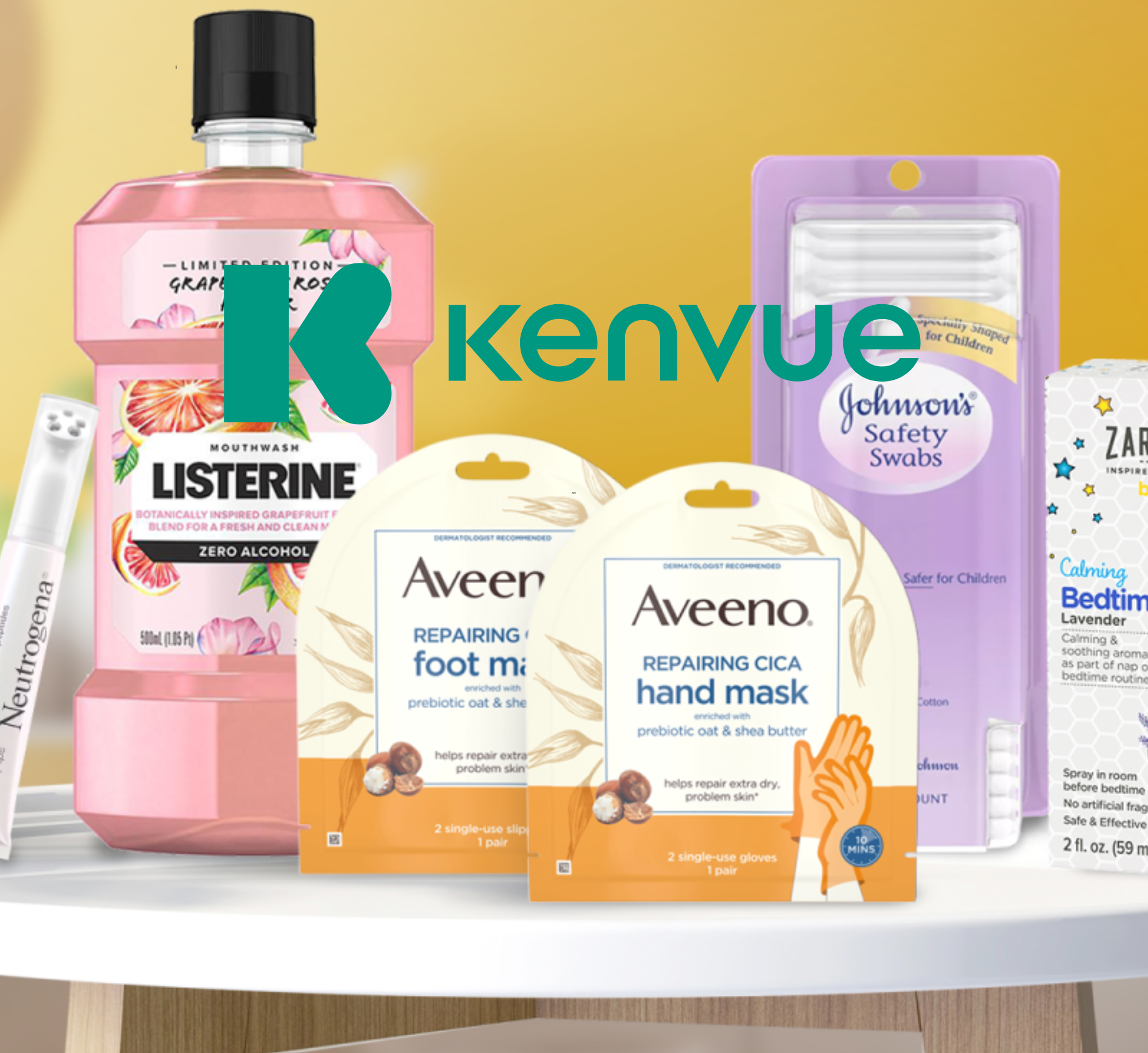
Kenvue logo and products: Neutrogena, Listerine, Aveeno, Johnson's and Zarbees
Case Study Related to Industry Page

Ambu Achieves Complete Medical Device Labeling Accuracy and Compliance with Kallik Veraciti™

Ambu A/S, a leading Danish company specializing in single-use endoscopy solutions and diagnostic and life-supporting equipment, solved significant challenges with their existing labeling system by implementing Kallik’s end-to-end cloud-based software, Veraciti™. With Veraciti, Ambu managed to achieve complete compliance, accuracy and greatly increased the efficiency of their labeling and artwork management process to ultimately increase speed-to-market.

The Challenges

Ambu's rapid expansion and innovative product development rendered their existing labeling inadequate for their evolving needs. With the introduction of numerous new products and updates to existing ones, the limitations of their outdated system became increasingly problematic.

Ambu's Labeling Manager emphasized the overwhelming task of managing, tracking and remembering everything when handling the process. “I was the only one actually creating labels in Ambu at that time. Now we have a lot of people creating labels within Veraciti™ and if we should remember all these things going forward then I think it will be very messy. So Kallik, or rather the Veraciti™ system, actually handles most of these things for us now."The absence of an efficient, all-encompassing system hindered compliance maintenance and label management across their extensive product portfolio - an issue which Veraciti™ solved.

The Solution

To address these challenges, Ambu implemented Kallik's Veraciti™ system. After considering several other systems, they chose Veraciti™ for its robust features and flexibility. Unlike traditional label management systems, Veraciti™ offered an end-to-end labeling solution that included handling phrases and symbols, making it easy to search for and reuse components across different products. 

Ambu’s Labeling Manager highlighted the system's abilities, “You can actually search for phrases, you can search for symbols and then you can use it across a lot of different products. Also when we have updates - it could be a phrase, it could be a symbol - then you will actually be warned when you create a project brief, the brief will tell you that you’ve not used the latest version of the symbol/phrase and to do something to update it.” The implementation of Veraciti™ was a collaborative effort between Kallik and Ambu. Ambu’s ERP Consultant praised the data migration process, noting that Kallik's team was hands-on and provided exceptional support, including multiple visits to Denmark to ensure a smooth transition. This partnership was instrumental in successfully migrating data and training Ambu's team to utilize the new system effectively.

The ERP team commented on the process, “We had a very good migration of data because we had a team from Kallik and a team from Ambu working together and the team from Kallik was also in Denmark several times. I think the support from Kallik was brilliant.

The adoption of Kallik's Veraciti™ system brought numerous benefits to Ambu:

1. Enhanced Efficiency and Speed: With Veraciti™, Ambu can now make changes faster, significantly reducing time-to-market for their products. The system's ability to manage and reuse phrases and symbols streamlined the labeling process, which was previously time-consuming and error-prone.

2. Improved Compliance: Veraciti's comprehensive audit log and tracking capabilities ensured that Ambu was in full compliance with regulatory requirements. Ambu’s Labeling Manager noted that during audits and visits from authorized authorities, Ambu could easily share all necessary information, demonstrating control over their labeling processes. “We are in full compliance. When we have audits and our authorized authority visiting us we can share all information that is needed and because everything is logged we have an audit log to show them everything every time we make a change.”

3. Centralised Label Management: The Veraciti™ system allowed Ambu to control all their labels within one unified platform. This centralization made it easier to manage updates and maintain consistency across their product range. Ambu’s Labeling Manager expressed her relief and satisfaction, stating, "We are now in control of all our labels in one system."

4. Scalability and Future-Proofing: As Ambu continues to grow and innovate, Veraciti™ provides a scalable solution that can adapt to their evolving needs. The system's flexibility to add extra features as required ensures that Ambu can continue to meet market demands and regulatory changes efficiently.

In the medical device industries, accurate and effective labeling is crucial to ensure patient safety and regulatory compliance. Labels provide essential information about product usage, storage handling, size indication, and other critical warnings. Mislabeling or inadequate labeling can lead to serious health risks, including incorrect usage of devices, which can result in severe patient harm.

Given the high stakes, it is imperative for companies to adopt a system that ensures accuracy and consistency in labeling from the outset. Kallik's Veraciti™ system exemplifies this by providing a comprehensive, end-to-end labeling solution that ensures full regulatory compliance. By automating and streamlining the labeling process, Veraciti™ minimizes the risk of human error, ensures up-to-date information, and supports efficient management of label changes.

In conclusion, the partnership between Ambu and Kallik has been transformative for Ambu's labeling processes. Are you interested in learning more about how Kallik can help your business to streamline and simplify your labeling and artwork management? Speak to one of our experts today. Call +44 (0) 1827 318100, email enquiries@kallik.com, or request a demo here.

Ambu Achieves Complete Medical Device Labeling Accuracy and Compliance with Kallik Veraciti™
Case Study Related to Industry Page

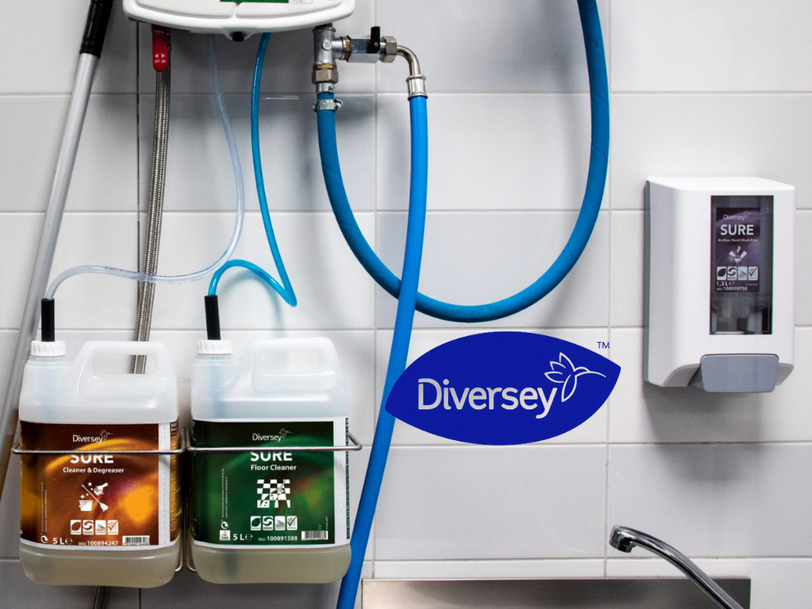
Diversey Consolidates Labeling Processes And Cuts Global Supply Chain Costs

Ensuring brand consistency and managing country-specific label variants can be challenging, and never more so than during periods of acquisition and divestiture. But that’s not the case at sustainable cleaning products leader Diversey, a Netherlands-based company that delivers cleaning and hygiene technologies to customers across its global sectors. Since adopting Veraciti™, Diversey has seen reduced costs, improved overall productivity and increased transparency.

Challenges

Having built up a successful pan-European business supplying cleaning products to the consumer and manufacturing sector, Diversey’s next step was to consolidate its multiple in-country specific manufacturing processes.

Moving to a single global operation presented the challenge of how to manage tens of thousands of artwork changes without risking non-compliance through introducing uncontrolled variations. “Each local Diversey national operating unit had the same item and in many cases, the information and formulation were the same,” points out the company’s Information and Process Development Lead in its UK office at Alfreton, Neil Harvey.

“Lacking a master global file, local affiliates would interpret requirements differently, which led to labeling inconsistencies. To drive down costs, we wanted to produce a graphically consistent label with multi-language information.

“We knew what we wanted — but there was nothing on the market that could do this until we spoke to Kallik.”

“Harmonizing the entire Central European region also meant we had to deal with Cyrillic fonts and multiple languages,” comments Diversey’s Chemicals Commercialization Lead for Europe Henk-Jan Van Pesch. “Our current system was not capable of handling these in a uniform way, and this became one of our main drivers for change.”

How Kallik helped

Ahead of consolidating label creation and approval, Diversey was using email to approve artworks, but the almost constant stream of updates driven by country-specific regulatory changes and differing language combinations were proving impossible to track using this approach.

Embedding proper workflow approvals, as well as multiple language support, were therefore key selection criteria. In addition, Diversey’s leadership had identified that any solution would need to:

  • Capture all label content in a single solution
  • Manage and version all phrases, imagery and translations
  • Offer flexibility to work with artwork studios and/or fully automate artwork creation
  • Enable in-country operations to fully participate in change management
  • Empower business users through presenting accurate and timely information in a simple way.

Diversey Consolidates Labeling Processes And Cuts Global Supply Chain Costs

Results

Following successful embedding of Veraciti into all Diversey’s key labeling and artwork management processes, the customer reports that its logistics, manufacturing and supply chain teams have become the greatest advocates of the solution, as each is now benefitting from vastly improved inventory management.

Global change management has been greatly simplified, with the costs of producing graphically consistent labels with multi-language content being significantly reduced.

Veraciti was a key enabler in driving down complexity in the print supply chain, confirms Van Pesch. “It has also enabled us to increase artwork production capacity without increasing numbers of staff,” he says, commenting how, “The ability to ensure exact placement of graphics means that we can leverage greater return from investment in print plates through their re-use.”

“Kallik was the catalyst for us to centralize production, logistics and SKU management. Without Veraciti, this would not have been possible,” says Harvey. “Veraciti’s powerful Phrase Library, Asset Manager and Workflows have also allowed us to double the number of artworks we manage across Eastern Europe using the same number of people. Being cloud-based, the Kallik solution also means we no longer have the hassle of global databases not synchronizing.”

Van Pesch points out that, “The way in which Veraciti prompts and drives the process while allowing local markets to manage the necessary legal and regulatory requirements for each country, delivers global design consistency.

“The solution also provides a complete audit log of the approvals process, making it much easier for us to demonstrate compliance.”

Additional Benefits:

  • 13,000 approx. customer artworks across Europe being managed by one solution, Veraciti
  • One solution used across over 50 countries and 500-plus users simplifies traceability and compliance
Diversey Consolidates Labeling Processes And Cuts Global Supply Chain Costs

Veraciti™ Sets New Quality Benchmarks at Integra LifeSciences

Surgical and medical instrument manufacturing leader Integra LifeSciences, a world leader in medical technology, is dedicated to limiting uncertainty for surgeons so they can concentrate on providing the best patient care. The New Jersey, US-based firm offers innovative solutions in orthopedic extremity surgery, neurosurgery, spine surgery, and reconstructive and general surgery. Kallik’s Veraciti™ solution has embedded clarity and control into Integra’s artwork approval process — enabling the organization to streamline manufacturing operations, reducing time to market for new product launches.

Challenges

Like many other successful life sciences businesses, Integra LifeSciences was experiencing business growth pains that meant it had outgrown its legacy paper-based labeling and artwork based processes. As a result, it needed a completely new approach to cope with ever-increasing volumes of regulatory and product-driven changes.

“We wanted to implement a single organization-wide solution that would bring new levels of robustness into the artwork approval process,” notes the company’s Senior Marketing Operations Manager, David Dreibelbis.

“We had 20 different processes in place across the organization, making artwork and label management extremely challenging. We knew there was a knock-on effect on product launches, but with zero visibility, we couldn’t measure the impact, and so were unable to take corrective action.”

How Kallik helped

Integra’s brief was for a solution that would deliver greater transparency, enhanced compliance, plus deliver to internal stakeholders tools for improved oversight and governance, with an ultimate objective of being able to eliminate uncertainty and simplify all touchpoints in the lifecycle process. Operating a paper-based approval mechanism was also masking true process bottlenecks across Integra’s label and artwork management processes, while with an expanding product portfolio, and an ever-increasing volume of compliance requirements, Integra needed to achieve new levels of scale and consistency to meet its quality objectives.

Kallik’s Veraciti solution was able to meet all Integra’s requirements with its tailored artwork approval and asset approval lifecycle workflows. As Dreibelbis confirms, “Initially we were looking for an artwork approval tool with the capability of workflow management. We considered a number of established vendors, but Veraciti’s simple-to-use approval tools, plus the artwork creation functionality it offered, made it a clear choice for us.

“Veraciti’s artwork approval workflow satisfies all our compliance requirements,” he continues. “Because everything is in one place, retrieval of documents and artwork assets is a simple process for any stakeholder to access. This process now sets an unparalleled standard not seen before in our organization; the reports and audits available are first class.”

This was just the tip of the iceberg. Veraciti’s modular structure has made it both simple and effective to adopt additional functionality, such as Veraciti’s Automated Artwork Generator. Many manual repetitive tasks that previously consumed valuable resources have, as a direct result, been completely eradicated from internal Integra workflows.

Veraciti™ Sets New Quality Benchmarks at Integra LifeSciences

Results

Since implementation more than 5 years ago, Integra reports it has not had a single issue with compliance. “We are delighted with our 100% success rate that Kallik helps us to deliver,” Dreibelbis enthuses.

Reduced time to market and increased productivity are two other significant outcomes, while as it’s now benefiting from fully task-driven, accountable processes, Integra’s throughput yield has improved significantly, yet without the need for any additional resources.

Veraciti has also been pivotal in simplifying transition of labeling content during periods of business acquisition. The flexibility to import and export data through multiple sources makes the solution agile enough to cope with meeting the individual requirements of multiple geographic regions whilst ensuring global levels of consistency.

For Dreibelbis, “Deploying the Kallik solution has been transformational for Integra, and has been a
great decision. What began with labeling has moved onto marketing materials and the launch of an online catalogue.

“Each of our commercial organizations has benefited hugely due to the simplicity of Kallik’s artwork approval workflow,” he goes on. “Real-time Business Intelligence (BI) reports give senior business stakeholders full visibility of product launches, while our QA team has peace of mind from being able to generate compliance reports at the touch of a button. We are now planning full roll-out of Veraciti across our entire organization.”

Additional Benefits:

  • 100% Compliance Reporting Success Rate Over a Period of 5 Years
  • Collapse of 20 individual siloed labeling & artwork processes down to one
Veraciti™ Sets New Quality Benchmarks at Integra LifeSciences

House of Cheatham Increases Artwork Production with Zero Impact on Payroll

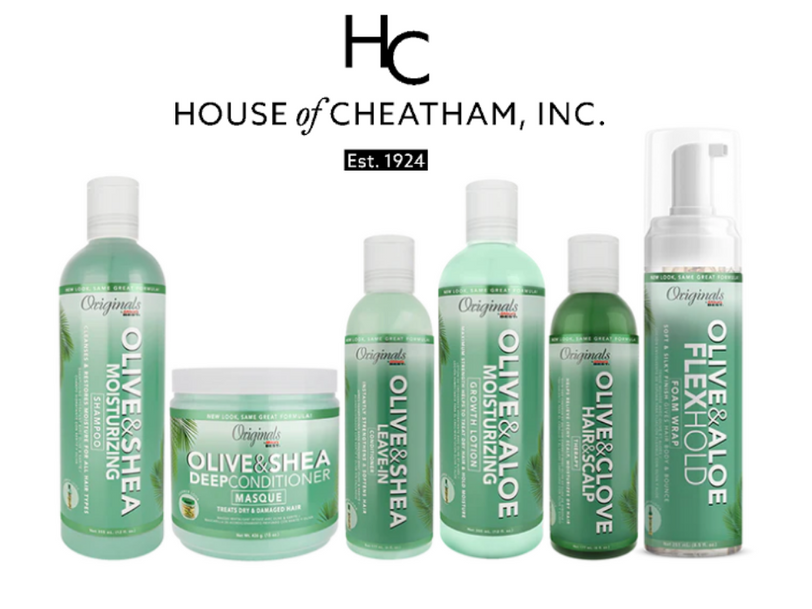
Based in the US state of Georgia, House of Cheatham is a market leader in the area of personal and beauty care, offering a wide range of skin and hair care products, as well as hair therapies for women, children, and men. Introducing enterprise-grade systems and processes within a small to medium-sized organization is not always easy – particularly when IT resources are scarce, but House of Cheatham has responded to increases in global regulatory requirements by a complete digital transformation of its labeling and artwork management processes, by using Kallik’s Veraciti™, eliminating costly bottlenecks and reducing time to market. 

Challenges

In the view of the company’s Executive Vice President, Jeff Carson, having built up an extensive portfolio of personal care products with strong brand allegiance, maintaining the latest versions of artwork files was becoming increasingly challenging. Labeling data files being used to create new artworks and/or undertake revisions requiring multiple iterations that caused downstream delays – delays further compounded by the use of external graphic artists and studios.

“Every time a label change was required, the business missed a key piece of information,” says Carson. 

“Essentially, our latest data files were disjointed from the process, and keeping up with the pace of change was proving to be difficult. We were typically experiencing up to nine amends per artwork before files could be approved and released to print.”

House of Cheatham recognized that to stay compliant with new regulatory requirements and to remain competitive in the marketplace, something had to be done. Another managenent conclusion was that that adopting a solution that minimized capital outlay on in-house IT resources was also the best fit for the business. Having evaluated several offerings on the market Jeff selected what he felt was the best in class cloud-based labeling and artwork management solution, namely Kallik’s Veraciti.

“Kallik stood out from the competition, as its team clearly understood the requirements of a small to medium business,” continued Jeff. “The scalability and flexibility of the proposed kallik solution also promised us amazing ROI, along with the exact functionality we needed. At the time of us making the decision, we decided Kallik was at least two years ahead of its nearest competitor using cloud technology.”

How Kallik helped

There have been a number of ways Veraciti has helped the company. Veraciti’s Asset Manager is allowing Carson and his team the ability to better process important data and track asset versioning more accurately. When it came to the creation of new versions, House of Cheatham has also gained the ability to only ever select the latest approved version to initiate projects. Having a full audit trail of the artwork approval process also means that the correct version of the artwork is always sent to the print supplier base.

“We are now using less staff time on this workflow, which allows the team to work on additional added-value projects. Our throughput has increased, but with the same number of staff: a true win-win situation.

“Kallik has also enabled us to identify and resolve bottlenecks in our processes that were previously difficult to detect, while Veraciti’s intuitive dashboards and automated reports allows us to measure the effectiveness of the whole launch process.”

Results

The benefits of the solution can be felt across the whole business. The key advocates of the solution are the marketing project managers as they are now able to drive projects with 100% accountability
by using Veraciti’s structured workflow tasks and reports.

“In the first year of implementing the solution, we processed 140 new artworks,” Carson continues. “Prior to Veraciti, the best we could achieve was 24 per annum. In the second year, we increased this figure to over 400, with no additional resources — a 17-fold increase in our artwork production levels compared to our previous solution. Not only this, but we’ve increased accuracy and taken significant costs out of the process.”

Veraciti has also had a positive impact on labeling inventory, reducing stock levels, while new labels can now be produced to an agreed critical path to ensure on-time delivery. Following successful adoption across the business, House of Cheatham now plans to expand the use of Kallik’s solution by using its Asset Manager as a way of controlling and versioning its ingredient declarations.

For Carson, “We’re delighted to have chosen Vericiti. We’re aware that there is much more we can do with the solution and look forward to rolling-out additional capabilities real soon, but overall Kallik’s solution has enabled us to start the artwork process from ‘a single source of truth,’ giving us huge time and cost benefits downstream.”

 House of Cheatham Increases Artwork Production with Zero Impact on Payroll

Additional Benefits:

  • An average 6-fold increase in the number of artworks created per year compared to the previous in-house solution
  • 80% improvement in speed to market, with 10 weeks taken out the process
 House of Cheatham Increases Artwork Production with Zero Impact on Payroll

Factory Labeling Migration Following Business Acquisition

Headquartered in Ohio, this US based company is a leading provider of customized solutions for hospitals, health systems, pharmacies, ambulatory surgery centres, clinical laboratories and physician offices worldwide, with approximately 50,000 employees in 46 countries.

Challenges

Risk of non-compliance

Faced with increasing complexity of regulations, markets and languages, plus a burgeoning volume of label changes and additions, the company recognized their existing in-house labeling solution could place them at risk of non-compliance. Governed by FDA regulations, errors anywhere in the labeling process could have resulted in labeling inconsistencies causing product recalls and punitive fines.

Lack of control

The provider also wanted to ensure they had accountability to each piece of content that appeared across labels, packaging and IFU’s - something their current solution was unable to provide.  Largely manual and disconnected labeling processes resulted in no one version of the truth, duplicated data, labeling inconsistencies and a complexity that could not scale to match the demands of the business. Much of their quality processes were paper based, limiting corporate level visibility and making it difficult to prove compliance.

Handling a major acquisition

With a new acquisition taking place around the same time, this acted as the catalyst for procuring a solution that would replace both their existing in-house system and de-risk the integration of the newly acquired business. Over 9,000 products needed to be re-labeled whilst manufacturing continued uninterrupted at the existing plant, before subsequently migrating the recently acquired company production lines to brand new facilities, all with zero downtime. This required re-branding and transitioning factory label printing to new facilities within extremely challenging timescales. Failure to achieve this would result in excessive financial penalties and potential non-compliance with FDA regulations. 

How Kallik helped

The medical device company chose Kallik’s Veraciti™ to replace both its existing factory print supplier and artwork management system with full integration to their ERP solution. Kallik’s Automated Artwork Generation (AAG) server along with its factory print capabilities were also selected as part of the solution, deployed as a SaaS and validated throughout its implementation.

Veraciti, with its support for 21 CFR Part 11 electronic signatures, would eliminate the use of paper-based quality processes. The option to make specific fields mandatory for certain individuals meant that the information was fully audited and could be passed through the business. Using Kallik’s ‘Project Brief’ to replace Excel and email based content collation would improve communication to artworkers, reduce effort for approval and manuscripts and enable the business to meet the following strategic goals:

  • Drive cost out of the labeling process
  • Reduce the time taken to review and approve artworks
  • Provide flexibility and agility whilst creating a platform and process for future growth
  • Enable comprehensive reporting against business KPI’s
  • Eliminate the need to install on-site IT infrastructure
  • Provide greater accountability, process transparency and robustness

Results

A solution was sought that would allow thousands of labels to be changed whilst production of products remained within the facility of the acquired business. They required transparency and control of the data to demonstrate that every piece of content of the new acquisition had been removed from the old labels within the timescales set to avoid penalty clauses. To do this, was necessary to first get control of the data by exporting all of labeling content from the existing internal IT systems into the Kallik solution.

The labels and IFUs of the acquired business were re-created with their new company branding and manufacturing address within the Kallik solution.  Once this was completed, the production and print facilities located in the existing site were connected to Veraciti™, removing any dependency on legacy IT and printing facilities. This gave transparency of label updates and print processes with full audit trails from day one.

This was a significant step in de-risking the integration process of the acquisition, granting the executive team complete transparency as well decoupling the labeling changes from the future physical move of the production lines to the new site. Kallik’s solution gave them the transparency and control they needed to make and report on label changes and provided a head start on the transition of the recent acquisition production facilities by initiating the change process within their manufacturing site.

Factory Labeling Migration Following Business Acquisition

World-leading oil and lubricants manufacturer takes back control with Kallik's help

In a market of increased regulation and counterfeiting threats, here’s how one world-leading oil and lubricants manufacturer took back control...

This company is one of the largest of the world's Big Oil companies and retails thousands of oils and lubricants across North and South America, and the Asia-Pacific – with all product labeling and artwork previously managed by disparate processes and systems.

In the face of tightening industry margins, constant regulatory updates and increased threat of counterfeiting, the organisation selected Kallik and its Veraciti™ platform to introduce automated labeling and artwork management – to quicken time to market, ensure compliance traceability and minimise counterfeiting.

Kallik has been working with one of the world’s largest oil and gas organisations since 2017, with a core focus on the oil and lubricants it retails to consumers across multiple major regions – from North and Latin America through to the Asia-Pacific.

With pressure on traditional oil and gas providers from more renewable market entrants, speed to market is an essential competitive advantage. But with thousands of lubricant products all requiring country-specific labeling and artwork localisation and compliance, speed to market can come at the cost of accuracy and safety.

The company needed to find a way to apply consistency and control of its labeling and artwork on an international scale – as well as drive cost-efficiencies and quicken speed to market in a sector where margins are becoming increasingly tight.

Cutting through product and artwork agency complexity

The main challenge was for the company to overcome the sheer scale and complexity associated with its current oil and lubricant labeling processes. This was previously managed by regional-specific relationships with a large network of third-party artwork agencies. While this naturally came with huge costs, this also brought significant delays when adjusting products to reflect upgrades, rebranding or regulatory changes.

Regulatory changes are also geography-specific, so the company struggled to get organisational oversight on the true extent of impacted products at a country-by-country level. With such a complex network of processes and systems, even understanding which labels and artwork were impacted by a particular regulation was a difficult and time-consuming task.

Challenges

  • Over 1,000 oil and lubricant products to manage and update on a regular basis
  • Competitive pressure to quicken speed to market
  • Complex network of artwork agencies
  • Growing threat from counterfeit oil and lubricants market
  • Combatting counterfeiting pressures 

Alongside this organizational complexity is the constant threat of counterfeiting in the oil and lubricants market. Over the past decade, the number of customs seizures of counterfeit and intellectual property-infringing goods worldwide has consistently exceeded 100,000 per year. These products are typically substandard and do not comply with the quality and safety regulations of their respective industries.

Oils and lubricants are essential products that play a central role in supporting continuous operation of machinery, with common applications across manufacturing, refrigeration, automotive and HVAC. The company had no way of globally enforcing strict labeling and artwork standards to mitigate counterfeiting threats – which mainly relies on ensuring all products contain its proprietary font.

All in one system to enforce control, consistency and compliance

This is why the world-leading oil and lubricants organisation engaged Kallik, seeking its labeling and artwork management (LAM) technology and team of experts. By implementing the Veraciti™ platform, the organisation was able to replace legacy systems and artwork processes - including one system which was approaching end-of-life, and some regions without any dedicated systems for labels and artwork - with a single LAM system to manage products across all geographies.

Solution

  • Veraciti™
  • Kallik technical support
  • Rules-based Labeling and Artwork Management (LAM)
  • Project roll-out builds automation, visibility and traceability into labeling and artwork 

As an established supplier and partner, Kallik has closely worked with the customer’s in-house team throughout this project, building on its extensive experience in implementing compliant label and artwork management solutions for highly regulated industries. Kallik experts provided technical support at key stages, including remote implementation support during the global Covid-19 pandemic – working alongside the customer’s team to identify and address any bottlenecks in the process and system region by region.

The project has now been successfully rolled out and Veraciti quickly deployed across Latin America, North America and Asia-Pacific, with the Kallik team tailoring each deployment to allow for regional-specific needs.

Benefits

  • One system implemented across all major regions
  • Labeling and artwork automation to quickly update any product in any geography
  • Consistency enforced across all labels and artwork to reduce counterfeiting

Quickening speed to market without compromising compliance and safety

With the automation provided by Veraciti, the company is now able to quickly assess the impact of any label or artwork updates or regulatory changes, and action those changes accordingly. Early statistics show that the organisation has been able to quicken time to market by 50%, due to the increased labeling and artwork automation, visibility and control provided by the system.

The platform also ensures strict enforcement of security and printing protocols to minimise counterfeiting. With automated label and artwork solutions ensuring the correct proprietary font is used across all labels, approved labels are then stored in the asset manager and any third-party printer is granted access, eliminating the risk of emailed variants as only the most recent, approved version can be printed.

"This project builds on the strength of the Veraciti platform alongside the deep industry expertise of Kallik in the oil and lubricants sector,” says Beth Peckover, VP Operations at Kallik. “This implementation has delivered greater speed to market, enables anti-counterfeiting and drives compliance across a vast global product portfolio.”

World-leading oil and lubricants manufacturer takes back control with Kallik's help
Tags
Case Study Related to Industry Page

Improving Össur’s IFU management and global business operations by overhauling legacy system

With over 50 years of experience in the non-invasive orthopaedics industry, Össur’s mission is to improve people’s mobility.

It is a global leader in non-invasive orthopaedics, developing and manufacturing innovative and life-changing solutions for the prosthetics and bracing & support market. Its operations span more than thirty countries worldwide across the Americas, Europe and Asia, employing over 4,000 staff to improve people’s mobility and quality of life.

Össur had already adopted the Kallik Veraciti™ label and artwork management solution as part of a change process project to drive value and decrease costs. However, new EU MDR regulations meant Veraciti soon became instrumental in the successful completion of MDR compliance across its operations.

Disparate data calls for consolidation into a centralized system

All Össur Class II medical devices require detailed Instructions For Use (IFUs). Due to the critical and often complex nature of these products, Össur’s IFUs contain large blocks of text with longer phrases than typical medical device labels. To add to the complexity, each of Össur’s existing IFUs had been developed by different employees at different times depending on the product release date, and stored in separate documents with a master spreadsheet of all phrases. This dated and manual process was sufficient to create individual IFUs one at a time, but to drive value and lower costs Össur needed to overhaul its legacy systems for more efficient processes.

Challenges 

  • Disparate, non-standardized legacy systems
  • Delays to product launches
  • Limited control and management of IFU assets
  • Three key operational challenges stemmed from these legacy systems and processes: fragmented data management, a lack of consistency and delayed product launches.

1. Fragmented data management means no visibility
Because each IFU had a separate document for text and artwork, and each unique text asset required individual translation, processing and management, IFU data could only be processed piecemeal in a time-consuming and manual procedure. The resulting disparate IFU documents meant that Össur had very limited visibility across hundreds of global product lines.

2. Lack of consistency in terminology impacts tracking ability
This disparate system for storing IFU data and lack of visibility resulted in many similar products using completely different phrases in their IFUs, with different terminology for the same or similar processes. This not only made it difficult to track and manage product information, as well as translate and update IFUs, but potentially had a negative impact on user experience.

3. Product launch delays
IFUs are the last step in the design process for new products. The inconsistencies and lack of visibility across IFU data assets made IFU approval slow and manual, causing delays to the launch of new products, especially when translations were needed for international markets.

On top of these core operational challenges, pressure from new EU MDR requirements pushed Össur’s IFU management system of disparate documents and mismatched data to the limit. With hundreds of products affected by this regulatory change, thousands of long IFU documents needed updating in a limited amount of time. Össur did not have the visibility into the disparate data sets to fully determine the scale of this compliance task.

Replacing legacy systems with standardization

It is here that the Kallik label and artwork management solution, Veraciti, has helped transform Össur’s business operations. Implementation of Veraciti has allowed Össur to consolidate all IFU phrases into a single centralized system, providing enhanced visibility over all IFU assets. This enabled Össur to identify key phrases that could be reused in multiple product IFUs – even some of the more complex products had a higher rate of phrase reuse than expected. The reusability of key phrases has led to a standardization of IFUs and a streamlining of product information.

This level of control has also enabled Össur to identify the scale of the MDR compliance project and successfully manage the full IFU update process. The ability to pre-approve phrases before they are used ensures every IFU is correct and compliant the first time around, minimizing error and improving efficiency.

Improving Össur’s IFU management and global business operations by overhauling legacy system

Solution

  • Veraciti™
  • Kallik implementation expertise and technical support
  • Smoother operations provide greater value to all stakeholders

Improved visibility and management of IFU phrase assets has significantly enhanced the IFU approval process. The standardization of IFUs through increased reuse of key phrases has reduced IFU cycle times, as IFUs can be designed and built quickly, addressing previous issues with delayed product launches. Increased reusability of phrases has also resulted in decreased costs for translation as less words need to be translated for different product lines.

Veraciti’s centralized database and automation capabilities allow for greater visibility into IFU assets. The increased standardization of IFUs has also made future regulatory compliance easier as Össur now has the powerful systems required to react swiftly and effectively to further regulatory change.

Össur customers also reap the benefits of this business transformation, as product standardization makes IFUs easier to understand and follow, enabling Össur’s customers to complete procedures correctly and efficiently.

Benefits

  • Single centralized solution for IFU phrase management
  • Simplified IT footprint for ease of management
  • Significantly reduced IFU cycle time and translation costs
  • Future advancements made possible with Veraciti

Today, Össur is in a strong position to expand Veraciti’s role within the business to label management and potentially along the rest of the value chain, to maintain consistent messaging and brand voice with a centralized data base accessible by all departments.

The advanced automation and cloud capabilities within Veraciti also make the possibility of digital IFUs and labels a reality. Within the platform Össur can create phrases and artwork that are easily integrated into a mobile format. By linking unique phrases with products for mobile use, Össur can provide new value with smart labels.

“For Kallik, software implementation is a partnership – we want to support our clients as much as we can throughout this process,” says Nick Harris, Head of Client Engagement at Kallik. “We are also learning from the experience of customers such as Össur and are always looking for ways to develop our software and continually add new value for our customers.”

Improving Össur’s IFU management and global business operations by overhauling legacy system