
Digital Product Passports
Digital Product Passports
Make sense of Digital Product Passport regulations and timelines, and see how Kallik helps you manage DPP data at a granular level, enabling faster updates, reducing errors and maintaining compliance across complex product portfolios and global supply chains.
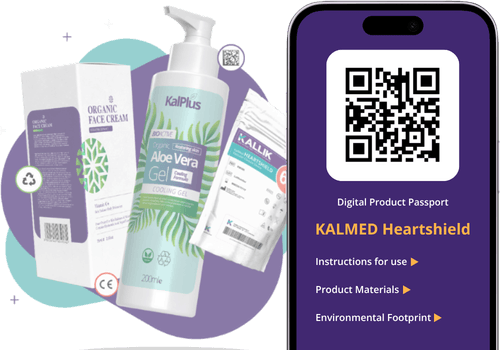
What Are Digital Product Passports?

Secure digital records
Digital product passports are secure digital records that track a product from raw materials to end-of-life, storing verified data on sourcing, manufacturing, carbon footprint, repair, and recycling.

Scan a QR code or NFC tag
Accessed by scanning a QR code, NFC tag, or similar data carrier on the product, they give businesses better traceability and help consumers make informed choices.

Introduced under the EU's ESPR
Introduced under the EU’s Ecodesign for Sustainable Products Regulation (ESPR), they aim to boost transparency and support a circular economy.
What This Means for Your Business
What This Means for Your Business
Digital Product Passports are fast becoming essential for selling into the EU, with non-compliance leading to fines, restricted access and potential product withdrawals. Getting DPP right goes beyond avoiding risk. It requires a scalable, digitised approach to managing product data across systems, suppliers and markets.
With the right foundation, you gain greater control over data, improve traceability across complex supply chains and reduce the risk of errors and recalls, while positioning your business as transparent and trustworthy in an increasingly regulated market.

Want to Know More? Find Relevant Blogs Below




Key Dates & What To Do Next

Key Dates & What To Do Next
- July 18, 2024 — ESPR: The Ecodesign for Sustainable Products Regulation (ESPR) became EU law, giving legal backing to Digital Product Passports and sustainable product data requirements.
- Mid-2026 — Central EU DPP Registry: The European Commission is expected to launch a central DPP registry to support storage and data access for product passport information.
- 2027 — DPPs go mandatory for specific sectors: Certain product categories — notably batteries under the EU Batteries Regulation — must carry Digital Product Passports starting February 18, 2027.
- 2027–2030 — Phased expansion: ESPR delegated acts will define product-specific DPP requirements across categories such as electronics, textiles, furniture, and construction materials, with phased implementation dates to follow.
Future-proof your product labeling strategy
Get clarity on what applies to your products and where your current labeling and data processes may fall short.
Our experts help you build a structured, scalable path to compliance.

Digital Product Passport FAQs
Who needs to comply with DPP requirements?
Digital Product Passport requirements primarily apply to manufacturers, brand owners, importers, and distributors placing products on the EU market. The regulations will initially focus on high-impact sectors such as textiles, electronics, batteries, and construction products.
Any organization responsible for bringing a regulated product to market must ensure that accurate, up-to-date product data is accessible through a compliant DPP. This includes maintaining information on materials, sourcing, environmental impact, and lifecycle details.
Does a DPP replace printed labels?
No, a Digital Product Passport does not replace printed labels. Instead, it complements them. Printed labels will still be required for essential information such as safety warnings, regulatory markings, and basic product details. A DPP extends this by providing a much richer layer of digital information that can be accessed via QR codes or other digital identifiers.
For many organizations, this means managing both physical labeling and digital product data in parallel—creating a need for integrated labeling and content management systems like those offered by Kallik™.
What happens if a product lacks a compliant DPP?
If a product does not have a compliant Digital Product Passport where required, it may not be allowed to enter or remain on the EU market.
Non-compliance can lead to regulatory penalties, product recalls, supply chain disruptions, and reputational damage. Authorities may also restrict sales or require corrective actions before products can be distributed.
As enforcement increases, ensuring DPP compliance will become a critical part of market access and risk management for regulated industries.
How does DPP relate to sustainability initiatives?
Digital Product Passports are a key part of the EU’s broader sustainability and circular economy strategy. They are designed to improve transparency across the product lifecycle by making data on materials, carbon footprint, recyclability, and repairability easily accessible. This enables better decision-making for consumers, regulators, and supply chain partners.
For businesses, DPP supports sustainability goals by encouraging more responsible sourcing, improving traceability, and enabling more efficient recycling and reuse processes. It also helps organizations demonstrate compliance with environmental regulations and ESG commitments.
What systems are needed to support Digital Product Passports?
To support DPP requirements, businesses typically need systems that can manage structured product data, integrate with existing ERP and supply chain platforms, and ensure accuracy across labeling and documentation. Solutions that provide data control, composability, versioning and traceability are critical for maintaining compliance at scale.