
10 Reasons Labeling Software Implementations Fail
Rolling out labeling and artwork management software should accelerate your operations and strengthen compliance. Yet many implementations stall, exceed budgets, or fail to deliver expected results. For packaging and labeling leaders at regulated manufacturers, understanding why projects go wrong is the first step toward getting them right.
The reasons for failure often trace back to decisions made early in the project. Kallik helps organizations in pharmaceuticals, medical devices, chemicals, and consumer goods navigate these challenges with structured workflows and proven implementation approaches. Here are the ten most common barriers to success.
Key Takeaways: Why Labeling Software Implementations Fail
- Poor requirements definition leads to platform misalignment, delayed rollouts, and missed regulatory obligations
- Insufficient stakeholder involvement causes resistance to adoption and gaps in critical workflow configurations
- Underestimating data migration complexity results in incomplete asset libraries and version control failures
- Skipping change management planning creates user frustration and undermines the benefits of new labeling technology
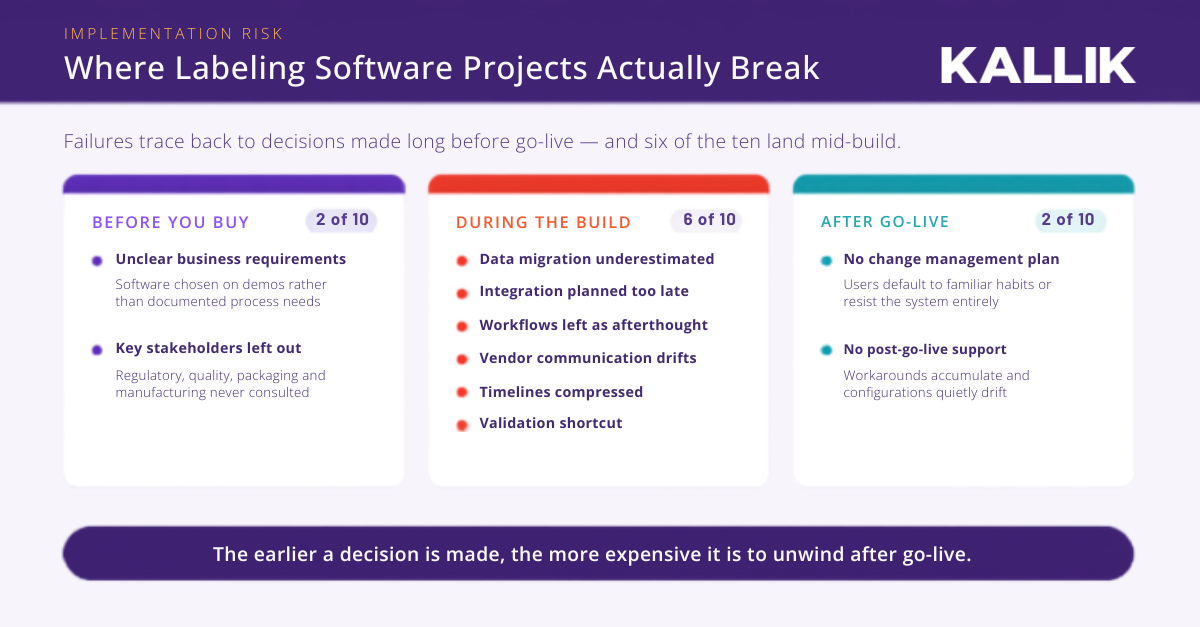
Why Labeling and Artwork Management Software Implementations Go Wrong
1. Unclear Business Requirements
Many implementations begin without a complete picture of what the organization needs. Teams focus on features rather than outcomes, selecting software based on demos rather than documented requirements.
This disconnect between expectations and reality surfaces during deployment when the platform cannot support specific regulatory workflows or regional labeling variations. The fix requires going back to stakeholders, mapping current processes, and defining measurable success criteria before vendor selection.
2. Insufficient Stakeholder Involvement
Labeling touches regulatory affairs, quality, marketing, packaging, and manufacturing. When implementation teams exclude key departments, the system ends up serving only a portion of the organization's needs.
This often results in workarounds, shadow systems, and resistance to adoption. Early and ongoing involvement from all affected teams ensures the platform configuration reflects actual approval workflows and hierarchies.
3. Underestimating Data Migration Complexity
Moving existing labels, artwork files, and content libraries into a new system is rarely straightforward. Organizations frequently underestimate the time and resources required to clean, standardize, and validate their existing assets.
Without a structured approach, teams end up with incomplete libraries, duplicate files, and broken version histories. AI-enabled onboarding tools can accelerate this process by digitizing existing labels and extracting reusable components.
4. Neglecting Change Management
New software changes how people work. Without a structured change management plan, users default to familiar habits or resist the new system entirely.
Successful implementations include role-based training, clear communication about why the change is happening, and dedicated support during the transition period. Change management is not optional when dealing with thousands of labels across multiple markets.
5. Lack of Integration Planning
Labeling software does not exist in isolation. It needs to connect with ERP systems, PLM platforms, regulatory databases, and print management infrastructure.
When integration planning happens late in the project, teams discover technical barriers that delay go-live or require expensive custom development. Planning integrations from the start ensures data flows correctly across your enterprise systems.
6. Inadequate Workflow Configuration
Every organization has unique approval processes, regulatory requirements, and market-specific workflows. Treating workflow configuration as an afterthought leads to systems that do not match how teams actually work.
This creates bottlenecks, skipped approvals, and compliance risks. Taking time upfront to document and configure workflows correctly pays dividends throughout the platform's lifecycle.
7. Poor Vendor Communication
Implementation success depends on clear, consistent communication between your team and the software vendor. When expectations are unclear or feedback loops break down, misalignment compounds over time.
Establishing regular checkpoints, escalation paths, and a single point of contact on both sides keeps projects on track and surfaces issues before they become critical.
8. Unrealistic Timelines
Pressure to launch quickly leads to compressed timelines that sacrifice thorough testing, training, and configuration. Teams rush through critical phases and inherit problems that persist long after go-live.
Building in adequate time for user acceptance testing, parallel running, and refinement protects your investment and ensures the system works correctly from day one.
9. Skipping Validation Requirements
In regulated industries, labeling software must meet validation requirements. Skipping or shortcutting validation creates compliance exposure and can require costly remediation later.
Understanding your regulatory obligations early and building validation activities into the project plan ensures audit readiness from the start.
10. No Post-Implementation Support Plan
Going live is not the finish line. Without a plan for ongoing support, optimization, and user feedback, initial gains erode over time as workarounds accumulate and configurations drift.
A clear support structure, regular system reviews, and a pathway for continuous improvement ensure your labeling management platform delivers value year after year.
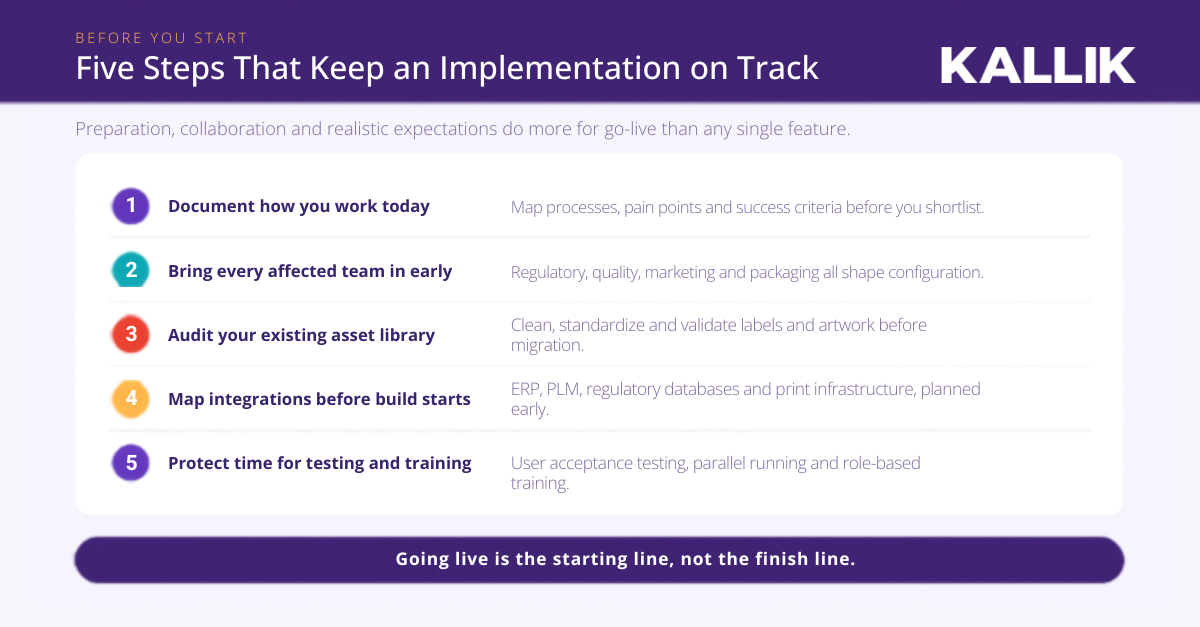
How to Set Your Implementation Up for Success
Avoiding these pitfalls requires preparation, collaboration, and realistic expectations. Start by documenting your current processes and pain points. Involve stakeholders from every affected department early. Build time into your timeline for thorough testing and training.
Kallik helps regulated manufacturers navigate implementation complexity with the power of structured workflows, AI-enabled label onboarding, and cloud-based artwork management. With more than two decades of experience supporting global enterprises, the platform is designed to reduce compliance risk and accelerate time to market.
If you are evaluating labeling and artwork management software, understanding these common failure points can help you ask better questions and make more informed decisions.
For more information on how we can support your business, you can read about how Kallik works here, or speak to one of our experts by emailing enquiries@kallik.com, calling +44 (0) 1827 318100 or filling in a form.
What is the most common reason labeling software implementations fail?
Unclear business requirements top the list. When organizations select software without documenting specific needs and workflows, the platform often fails to support critical processes.
This leads to workarounds, user frustration, and missed regulatory obligations. Thorough requirements gathering before vendor selection prevents this outcome.
How long should a labeling software implementation take?
Implementation timelines vary based on complexity, but rushing creates problems. Most enterprise deployments require several months to complete requirements gathering, configuration, data migration, testing, and training properly.
Building adequate time into your project plan protects your investment and ensures a stable launch.
Why is stakeholder involvement important in labeling software projects?
Labeling touches multiple departments including regulatory, quality, marketing, and manufacturing. Excluding any group leads to workflow gaps and resistance to adoption.
Early involvement ensures the system configuration reflects how teams actually work and secures buy-in across the organization.
What role does data migration play in implementation success?
Data migration is often underestimated. Moving existing labels, artwork, and content into a new system requires cleaning, standardization, and validation.
Incomplete migration leads to duplicate files, missing assets, and broken version histories that undermine the new platform's value.
How can organizations avoid implementation delays?
Planning integration requirements, configuring workflows thoroughly, and building in testing time all help prevent delays.
Establishing clear communication with your vendor and maintaining realistic expectations about timelines keeps projects on track.
What happens if validation requirements are skipped?
In regulated industries, skipping validation creates compliance exposure. Auditors may question system integrity, and remediation after go-live is more expensive than doing it correctly upfront.
Building validation activities into your project plan from the start ensures audit readiness and protects against regulatory risk.