
Full Compliance, Zero Bottlenecks: Inside Veraciti's Approval Workflow
Ask a labeling team where their launch time actually goes and you'll rarely hear "design." The design is usually done. What's holding things up is the approval. The version sitting unopened in someone's inbox. The regulatory comment that never made it into the file. The tracker somebody swears is up to date.
Approvals are where good artwork goes to wait, and in regulated industries waiting is expensive. A late sign-off pushes a launch date. A missed comment becomes a labeling error, and labeling errors become recalls, fines, and a very uncomfortable conversation with a health authority.
The fix isn't chasing people harder. It's a workflow that already knows who needs to see what, in what order, and won't let anything move forward until they've signed.
Why artwork approvals turn into bottlenecks
Three habits cause most of the delay, and all three feel completely normal until you measure them.
Manual handoffs
Someone finishes their review and emails the next person, or means to and doesn't. The process moves at the speed of the most distracted person in the chain.
Scattered feedback
Comments arrive by email, in a Word doc, in a meeting, scribbled on a printout. Somebody then has to consolidate it all, and consolidation is exactly where detail goes missing.
No single version of the truth
Ask five stakeholders which version is current and you can get five answers. Two of them will be confident and wrong.
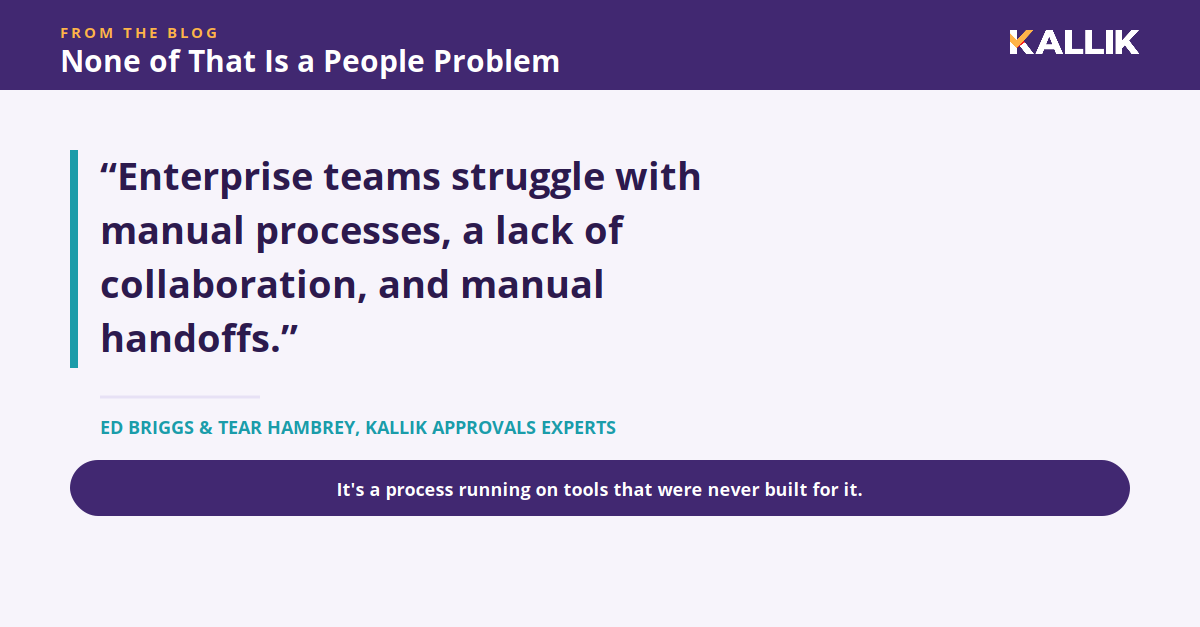
As our approvals experts, Ed Briggs, Product Requirements Analyst, and Tear Hambrey, Solution Consultant, put it in our recent walkthrough of the tool, enterprise teams struggle with "manual processes, a lack of collaboration, and manual handoffs." None of that is a people problem. It's a process running on tools that were never built for it.
A configurable approval route, built around your business
Veraciti handles approvals through a structured, digital route rather than a chain of emails, and the route is configured to match how your business actually signs things off.
For a lot of our customers, artwork needs eyes from several parts of the organization. Regulatory goes first, checking that mandatory content and regulatory images on the artwork are correct. Once that step is approved, the file moves automatically to marketing, who review for brand and messaging. From there it can go to quality, to legal, to a local market team, or wherever your SOP says it should go.
The key word is configured. That mapping is set up during implementation, so the system enforces your process instead of asking your team to remember it.
Comments and annotations stay on the artwork
Reviewers add comments and annotations directly onto the artwork or layout they're looking at. No separate feedback document, no reconciling six sets of notes, no ambiguity about which panel someone meant.
Everyone in the route sees the same file and the same context, which cuts out the back and forth that usually pads a review cycle by days.
The audit trail builds itself
Every action taken on an artwork or layout is logged. Who opened it, who commented, who approved, at which step, and when.
That matters for two reasons. Day to day, it tells you exactly where a job is sitting and who it's waiting on, so following up takes seconds rather than a round of "any update?" messages. When an inspector or auditor comes calling, the traceability is already there. You're not reconstructing a decision history from email archives eighteen months after the fact.
Static routes, custom routes, or both
Not every approval needs the same level of ceremony, so Veraciti gives you both options. Static routes lock in predefined approvers for a given product family or artwork type. Nobody can skip a step or quietly route around regulatory. That's the setup most pharmaceutical and medical device teams want.
Custom routes let users build a route for a specific piece of work, distributing it to the reviewers that particular job needs. Useful for one-off promotional packs, market-specific variants, or anything that falls outside the standard path.
Teams often overlook how much flexibility sits in the approval tool. It's usually the part of a demo where the room gets noticeably more interested.
What this actually buys you
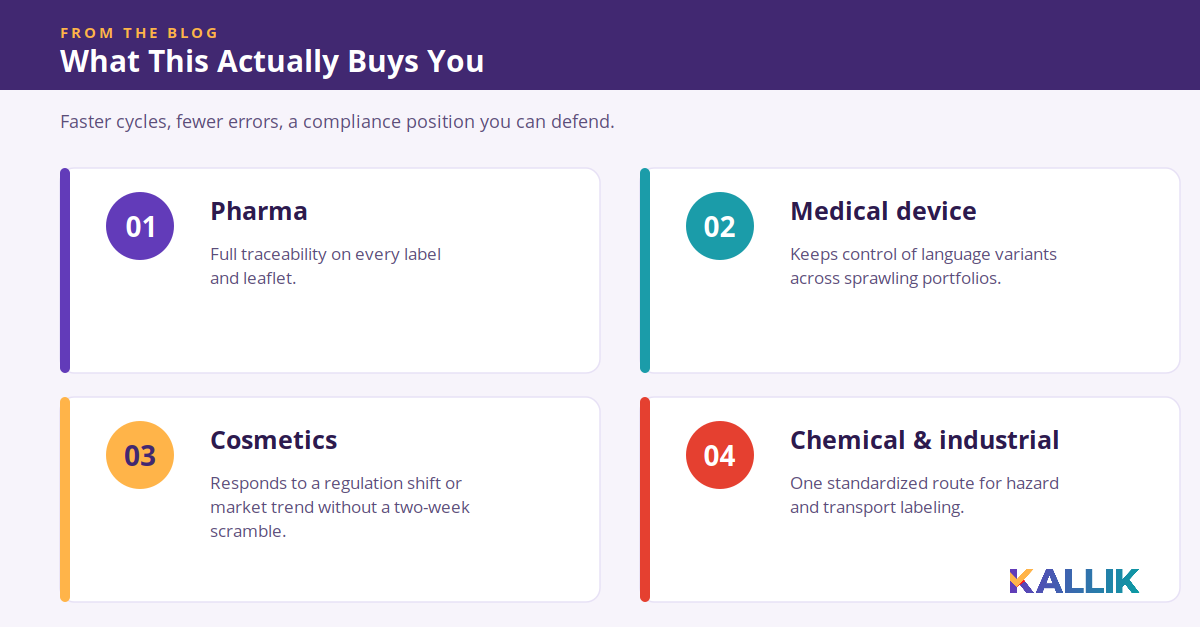
Faster cycles, fewer errors, and a compliance position you can defend. Pharmaceutical teams get full traceability on every label and leaflet. Medical device teams keep control of language variants across sprawling portfolios. Cosmetics teams can respond to a regulation shift or a market trend without a two week approval scramble. Chemical and industrial teams get one standardized route for hazard and transport labeling.
If your approvals currently live across email, spreadsheets, and hope, there's a better version of this available. Book a demo and we'll walk you through the approval route using your own scenarios. Speak to our labeling and artwork experts by filling in a form here, or book a demo here.
Read our free guide on getting AI-ready
FAQs on Approval Workflow
What is an artwork approval workflow?
An artwork approval workflow is the defined sequence of reviews and sign-offs that packaging artwork must pass through before it can be released to print. In regulated industries this usually involves regulatory, quality, marketing, and legal stakeholders, each reviewing for different criteria and each recorded as part of the compliance record.
How does Kallik speed up artwork approvals?
Our Veraciti software removes the manual handoffs. Artwork moves automatically to the next approver once a step is complete, comments and annotations are made directly on the artwork rather than in separate documents, and everyone works from a single controlled version. That eliminates the chasing, consolidating, and version checking that consume most of a typical review cycle.
Can approval routes be configured for our specific process?
Yes. Approval routes are configured during implementation to match how your organization signs off artwork, including the order of departments and the approvers at each stage. You can use static routes with predefined approvers, or let users build custom routes for specific jobs.
Does Veraciti provide an audit trail for artwork approvals?
Veraciti logs every action performed on an artwork or layout, including comments, annotations, and approvals, with the user and time stamp attached. This gives you complete traceability for internal governance and for health authority inspections, without anyone having to assemble evidence after the fact.
Which industries use Veraciti for artwork approvals?
Veraciti is used by pharmaceutical, medical device, cosmetics and personal care, chemical, and FMCG organizations. These are sectors where labeling content is regulated, portfolios are large, and the cost of an approval error is measured in recalls and regulatory action rather than reprints.