Is Your Labeling Operation Ready for AI? A Self-Assessment for Enterprise Teams

Introduction: Why AI Readiness Matters Now
Clear product identification and easy information sharing is currently more important than it’s ever been. That has always been true for regulated industries, but it is becoming true in a much more literal, technical sense. Regulators, retailers, and now AI systems all expect product data to be structured, accessible, and correct – not just printed clearly on a label.
Two forces are converging on labeling and packaging teams at the same time, and most organizations are only really tracking one of them.
The first is regulatory. The EU's Ecodesign for Sustainable Products Regulation (ESPR) is rolling out a Digital Product Passport requirement that starts with batteries in February 2027 and expands to textiles, furniture, electronics, and other categories through the rest of the decade. GS1's global Sunrise 2027 initiative is pushing every barcode toward carrying richer, structured data. Packaging waste rules under the EU's PPWR are tightening through 2026. None of these programs are optional add-ons. They require product data that is centralized, standardized, and machine-readable, which is a very different bar than "the label looks correct when printed."
The second force is AI. Enterprise software is being rebuilt around AI agents at a pace that is genuinely hard to overstate. Recent research puts overall enterprise AI usage at close to 88 percent of organizations using AI in at least one business function, and Gartner forecasts that a large share of enterprise applications will carry task-specific AI agents within the next year or two. Marketing, regulatory affairs, supply chain, and quality teams are all being asked, in one form or another, whether they are "ready for AI."
Before going further though, it’s worth pausing on what that question actually means. “AI” has become a catch-all term, and not everything being sold as AI is genuinely AI. Some of it is automation, some of it is machine learning, and some of it is task-specific decision support. None of these options is automatically better or worse than the others – what matters is matching the right technology to the right problem. For regulated labeling teams, that means starting with the real operational challenge first: poor data quality, disconnected systems, manual approvals, inconsistent metadata, or limited traceability. Only from there does it become clearer whether you need automation, machine learning, AI, or simply a better-governed foundation before any of those tools can deliver value. We explore this distinction in more detail in our blog on automation vs. machine learning vs. AI. (add blog link here!!).
The stakes behind getting that distinction right are rising too, because enterprise AI is already moving away from broad, generic promises and toward more specific, domain-led use cases. Gartner predicts that by 2028, “one-size-fits-all” generalist AI will fail to scale for enterprises, driving a shift toward specialized domain language models designed around specific industries, business functions, or problems. For labeling and artwork management, that reinforces a simple point: AI readiness is not about adding a generic AI layer on top of the process. It’s about creating the structured, trusted, domain-specific data foundation that AI needs to be useful in a regulated environment.
Here is the problem: these two forces point in the same direction, and most labeling and data environments are not built for either of them. Structured metadata, centralized systems, clear version control, and auditable approval trails are the foundation both regulatory compliance and AI readiness are built on. Get that foundation right, and you are prepared for what is coming from both directions at once. Get it wrong, and every new regulation or AI initiative becomes another fire to fight rather than a capability you can build on. This guide is not another AI hype piece. It will not tell you that AI is about to replace your labeling team, and it will not pretend adoption is as simple as switching on a tool. Instead, it takes a practical look at what "AI-ready" actually means for enterprise labeling and workflow management, where most organizations currently stand, and what a genuinely AI-ready future could look like when the underlying data, metadata, and processes are built the right way.
Here's what we will cover:
- The problem: why messy labeling and data workflows create risk, with the numbers behind it
- A future vision: what labeling could realistically look like by 2035, with AI agents and humans working together
- Where most enterprises stand today: the messy middle ground most organizations are actually in
- A self-assessment: so you can find out where your organization falls on the AI readiness scale, and get a personalized set of next steps
The goal isn’t to convince you to adopt AI immediately. Instead, the aim of this guide is to help you build the foundation that makes AI worth adopting, and to help you avoid the mistakes that are already showing up across regulated industries.
The Problem: Why Messy Labeling and Data Workflows Create Risk
Most enterprises did not set out to build fragmented labeling processes – they simply grew into them accidentally over time. A new product line here, a regional acquisition there, a team that started using its own spreadsheet because it was faster than waiting on the "official" template. Over time, these small decisions add up to a labeling environment that is difficult to see clearly, let alone control.
The scenario playing out inside a lot of enterprises
Picture a regulated manufacturer managing labels across multiple systems, shared drives, spreadsheets, email threads, and approval workflows. In most cases, teams do have a way to manage versions and approvals because they have to. The trouble is that the process often relies heavily on manual checks, individual knowledge, and time-consuming follow-up.
A label version may be controlled, but finding the full context behind it can still take effort. Approval history may exist, but it may sit across emails, workflow records, comments, or separate systems. Metadata may be captured in some places, but not always consistently enough for teams to search, filter, report, or trace labels quickly across markets, product lines, or regulatory requirements.
The result is a labeling environment that functions day to day, but becomes harder to manage when pressure increases. A new regulation, formulation change, audit request, acquisition, or AI initiative can quickly expose how much manual effort is still needed to understand what changed, who approved it, which labels are affected, and whether the right information is connected in one place.
Regulatory pressure is intensifying, not easing off
Enforcement data backs this up. The FDA issued 470 warning letters in 2025, a sharp increase from prior years, with drug and biologics warning letters alone rising 59 percent year over year, from 190 to over 300. Missing or inadequate written procedures, weak documentation, and data integrity gaps were among the most frequently cited issues, rather than exotic scientific failures. In other words, the FDA is not primarily catching companies making bad products. It is catching companies that cannot demonstrate control over their own documentation and processes.
The FDA's drug enforcement data for fiscal year 2025 also recorded over 300 recall events, the large majority classified as Class II, meaning a moderate but real risk to health. Chemicals and food and beverage companies face parallel pressure: CLP labeling requirements in the EU, allergen declaration rules, and an expanding set of packaging and sustainability regulations under PPWR and ESPR, each with its own documentation and traceability expectations.
None of this is unique to any one industry. Wherever a regulator can ask "show me who approved this, when, and against what version," a fragmented labeling process becomes a liability, even when the label itself happens to be correct.
The direct and indirect cost of getting it wrong
When mislabeling or an undeclared allergen triggers a recall, the numbers add up quickly. Industry estimates from the Grocery Manufacturers Association and the Food Marketing Institute put the average direct cost of a food or beverage recall at around $10 million, covering notification, product retrieval, and disposal alone; the FDA has cited a similar figure for the global cost of single-product recalls. That figure does not include indirect costs: lost shelf space, canceled contracts, litigation, and reputational damage that can take years to repair. Some individual incidents have run far higher. A well-known 2022 infant formula contamination recall, for example, disrupted national supply for months and drew lasting regulatory scrutiny and reputational damage. Broader recalls, where the source of contamination cannot be pinned down quickly, can spread costs across an entire product category, not just the responsible batch.
The pattern holds outside food and beverage too. In pharma, an open warning letter that escalates into a consent decree can cap production and mandate outside audits for years, at a cost far higher than the original documentation gap that triggered it. In every regulated sector, the driver is usually the same: teams could not quickly show what changed, who approved it, and why.
Where this shows up day to day
Beyond the headline risks, fragmented workflows create a steady drag on the business that is easy to underestimate because no single instance of it looks like a crisis:
- Slow approvals. When sign-off depends on tracking down the right person and the right file version, launches slip, and teams spend more time chasing status updates than doing the work in front of them.
- Weak auditability. If you cannot quickly show a regulator, or your own leadership, who approved a label, when, and against what version, you are exposed, even when nothing has actually gone wrong yet.
- Duplicated and conflicting work. Without a single source of truth, teams in different regions or business units often end up recreating labels or artwork that already exists elsewhere in the business, sometimes with subtle, risky differences.
- Institutional knowledge walking out the door. When label history lives in individual inboxes and shared drives rather than a structured system, a single departure can leave a team unable to explain why a label looks the way it does.
Why this matters even more once AI enters the picture
This is the risk that is easiest to overlook, and arguably the most important one right now. AI exposes messy data, faster and at greater scale. That risk becomes even more significant as organizations move from simple automation toward agentic AI, where tools are expected to act, recommend, route, or decide with greater independence.
Gartner's research has repeatedly identified poor data quality as one of the leading causes of AI project failure, with estimates across recent surveys ranging from roughly 40 percent to as high as 85 percent of AI initiatives struggling or failing for exactly this reason. A more recent Gartner survey of IT infrastructure and operations leaders found that 38 percent cited poor data quality or limited data availability as a direct cause of AI project failure. Separate industry analysis puts the average cost of poor data quality at close to $13 million a year for a typical large organization, well before any AI initiative is layered on top. If your source data is incomplete, duplicated, inconsistent, or scattered across systems that do not talk to each other, any AI tool built on top of it will face those same problems.
For a labeling team, this could mean an AI tool confidently generating artwork copy from an out-of-date formulation record, or a compliance-checking agent missing a required regulatory statement because the metadata it needed to check against was never captured in the first place. The tool is not the failure point, but the data underneath it is.
The bottom line
None of this means AI is not worth pursuing, or that labeling teams should slow down on modernization. It simply means that fixing the foundation – centralizing data, adding structured metadata, defining clear approval workflows – has to come before layering intelligence on top of it in order to be successful.
Future Vision: What Labeling Could Look Like in 2035
It is worth pausing to imagine where this could realistically go, because the future of labeling does not have to look like an extension of today's chaos. The regulatory groundwork for a very different future is already being laid through rules with real dates attached to them right now.
The building blocks are already being put in place
We touched on the regulatory timeline earlier: the EU's mandatory battery passport, GS1's Sunrise 2027 barcode standard, and the wider Digital Product Passport framework under ESPR. Each of these programs assumes the same thing: that product information exists as structured, connected data that travels with the product rather than as a static PDF sitting in a shared folder.
By 2035, this way of working will almost certainly be the default expectation across most regulated industries, because the infrastructure, the data standards, and the customer and regulator expectations will already be in place.
A connected labeling environment
Picture an enterprise labeling environment in 2035. Every label originates from a single, structured source of data. That record carries the metadata that tells you everything you need to know: which market it applies to, which regulations govern it, when it was last changed, who approved it, and why.
AI agents handle a meaningful share of the repetitive work that currently eats up hours of skilled people's time. They check draft artwork against current regulatory requirements automatically, flagging a missing allergen statement or an outdated claim before it ever reaches a human reviewer. They flag inconsistencies between a label and its underlying formulation record before a mistake makes it into production. They route content to the right reviewer based on risk level and jurisdiction, rather than relying on someone remembering the correct distribution list. And when a regulation changes, the system shows instantly which labels are affected across every market, routing them for review automatically rather than leaving someone to comb through folders trying to work out what needs updating.
Version history is built into the system by design, so every change is traceable and every approval is auditable as a matter of course – not something to be reconstructed after the fact under audit pressure.
Human judgment stays central, not optional
None of this means the future involves no human input. Human oversight remains central, particularly in regulated environments where the cost of getting something wrong is measured in recalls, fines, and consumer or patient safety. People still make the calls that matter: approving final artwork, resolving genuine exceptions, deciding how to interpret an ambiguous or newly introduced regulation, and taking accountability for what ultimately goes to market.
Current AI agent statistics back this up. A survey of over 500 enterprise leaders by Zapier found that human-in-the-loop, meaning built-in approval gates before an AI agent's output moves forward, remains the most common approach to managing AI agents, used by 38 percent of organizations. In regulated industries specifically, this is likely to remain the permanent strategy, because accountability for a label or a regulatory claim cannot be delegated to software, no matter how capable it becomes. AI's role is to remove the manual grind around those decisions, not to replace the judgment behind them.
What "AI-ready" actually means
In practice, AI readiness looks like a connected system, supported by AI agents, with human judgment built in at the points that matter most. The building blocks – centralized data, structured metadata, and defined workflows – already largely exist today as concepts and, increasingly, as regulatory requirements. What most enterprises need is a clear, sequenced path from where they are now to that connected future, rather than trying to leap there in one step.
Curious what this could look like for your own labeling process? Try asking an AI tool to imagine labeling in 2035 with an end-to-end, cloud-based, AI-ready platform like Kallik’s Veraciti™ at the core of the workflow, and see what comes back. It is a useful way to stress-test your own roadmap against a longer-term vision.
Current State: Where Most Enterprises Are Today
If the 2035 vision feels far off, that is because for most organizations, it currently is. The gap between where enterprises are today and where AI-ready labeling needs to be is significant, and it is worth being honest about that gap rather than glossing over it.
Most enterprises are stuck in "the messy middle"
Few organizations are running entirely on spreadsheets and email at this point, and very few have a fully centralized, metadata-rich, audit-ready system either. Instead, most enterprises have pockets of structure surrounded by workarounds.
A regulatory affairs team might have a reasonably well-organized system for tracking submissions, while the labeling and artwork process that feeds into it still runs largely through shared drives and email approvals. A packaging team might have adopted a content management tool for storing files, but without the structured metadata that would let anyone search, filter, or report on them meaningfully. Version control might exist as a written policy, without a system that actually enforces it in practice. This partial structure creates a false sense of security, one that often holds up fine until an audit, a recall, or a stalled AI pilot exposes the gaps underneath it.
The AI adoption numbers tell the same story
This "messy middle" pattern shows up clearly in current enterprise AI data, and it maps almost exactly onto where labeling and data workflows stand today.
We mentioned earlier that close to 88 percent of organizations using AI in at least one business function - which sounds great and like near-universal adoption. But when the same research looks at scaled, production-grade use of AI agents specifically, the number drops sharply: McKinsey's State of AI research found only around 23 percent of organizations had adopted AI agents at scale, despite substantially higher levels of experimentation. Separately, WRITER's 2026 enterprise AI survey found 79 percent of organizations still face significant challenges translating AI adoption into real business value, even as investment climbs. The gap between experimenting with AI and actually running it at scale across a function is large, consistent across multiple independent surveys, and directly tied to data and governance readiness rather than the sophistication of the AI tools themselves.
Gartner’s latest emerging technology research makes the same warning even more direct: by 2029, it predicts that over 70 percent of enterprise agentic AI initiatives will fail because of executive “agent-washing” and opaque machine reasoning that undermines human trust. For labeling teams, that is a critical distinction. The risk is not simply that an AI project fails to impress – it is that a poorly understood, poorly governed AI initiative creates more uncertainty in a process that already depends on clarity, accountability, and control.
Sound familiar? It is the same "some structure, but not enough" position most labeling and packaging teams are already in. Pockets of automation and good practice exist, but they have not yet been connected into something an AI system, or a regulator, can rely on consistently.
Why partial structure creates a false sense of security
Teams operating in this middle ground often believe they are more organized than they actually are, right up until something forces a closer look. An audit request that takes days to fulfill instead of minutes,a recall investigation that reveals nobody is quite sure which label version reached which market, or an AI pilot that stalls out because the underlying data could not support what it was being asked to do.
This enforcement and AI failure data both point the same way. FDA warning letters in 2025 were not, for the most part, about companies making fundamentally unsafe products. They were about companies unable to demonstrate that their documentation, procedures, and version control actually held up under scrutiny. AI project failures follow the same shape: the technology gets the blame, but the root cause is almost always the state of the data feeding it.
What separates the organizations pulling ahead
The good news is that this middle ground is not a bad place to start from, because partial structure is still structure. But to move from “somewhat organized” to genuinely AI-ready, organizations need to go further than improving individual processes. They need to bring labeling data, metadata, workflows, approvals, and version history into one controlled system.
That matters because AI can only create value from the information it can access, understand, and trust. If label content sits in one place, approval history in another, regulatory logic in someone’s inbox, and metadata spread across spreadsheets, an AI tool has no reliable foundation to work from. It may be able to automate small tasks, but it cannot safely support high-value use cases such as compliance checking, impact analysis, artwork validation, intelligent routing, or market-specific label generation.
The organizations moving fastest toward genuine AI readiness are the ones treating data structure as a business priority, not a technical clean-up exercise. They are centralizing their labeling information into a single source of truth, capturing the metadata that gives that information context, and making sure approvals, version control, and audit trails are built into the process rather than reconstructed afterward. That creates the structured, governed environment AI needs to deliver meaningful ROI.
In other words, the goal is not just to “use AI” in labeling. The goal is to give AI the best possible data environment to work from. When everything sits in one connected system, with clear ownership, traceability, and context, AI can do far more than speed up admin. It can help teams identify risk, reduce duplicated work, surface affected labels faster, support better decision-making, and make the entire labeling operation more responsive to regulatory and market change.
Which is exactly what the assessment in this guide is designed to help you understand: whether your current labeling environment gives AI the structured foundation it needs, or whether fragmented systems, missing metadata, and disconnected approval history are limiting the value you could get from it.
Conclusion: Where to Go From Here.
Understanding the risks of a fragmented labeling process is one thing. Knowing exactly where your organization stands, and what to fix first, is another. That is where most teams get stuck: not from a lack of awareness, but from not having a clear, honest picture of their own current state.
This is where Kallik can help. Our team has decades working alongside regulatory affairs, packaging, and labeling teams in some of the leading businesses in pharma, medical devices, chemicals, oil, consumer goods, and food and beverage, helping them move from fragmented, manual processes toward centralized, audit-ready systems built for what comes next. We have seen firsthand which gaps create the most risk, and which changes make the biggest difference first, and we are happy to share that experience with you directly.
To help you get started, take our AI readiness assessment below. In a few minutes, it will give you a clear picture of where your business currently sits on the readiness scale. Whether you are further along than you think or still working through the basics, it is a useful, no-pressure way to see exactly where to focus first.
You can also contact one of our label and artwork management experts by filling in the form here, calling +44 (0) 1827 318100, or emailing enquiries@kallik.com.
The Results
AI-ready foundation
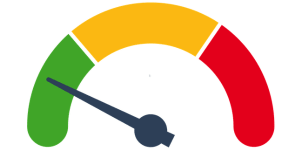
Your labeling workflows are in a strong position to support AI. With centralized label management, structured metadata, clear approvals, auditability, and human oversight in place, you have the foundations needed to explore AI-enabled workflows with greater confidence.

Progressing toward AI readiness
You have some of the right foundations in place, but there are still gaps that could limit the value of AI. Strengthening areas such as metadata, approval workflows, audit trails, and reliance on manual handoffs will help you move toward more reliable, scalable AI-ready labeling.

Not AI-ready yet
Your current labeling setup may make it difficult to use AI safely and effectively. If labels are spread across spreadsheets, emails, or manual processes without structured metadata, clear approvals, auditability, or human review points, the first priority is to modernize your workflow foundations.